Elementary School Teacher Education (PGSD) Students from the Faculty of Teacher Training and Education (FKIP) of ULM Qualified for the 2025 LIDM Finals, Creating an Interactive Website for Elementary School Students
Elementary School Teacher Education (PGSD) Students from the Faculty of Teacher Training and Education (FKIP) of ULM Qualified for the 2025 LIDM Finals, Creating an Interactive Website for Elementary School Students
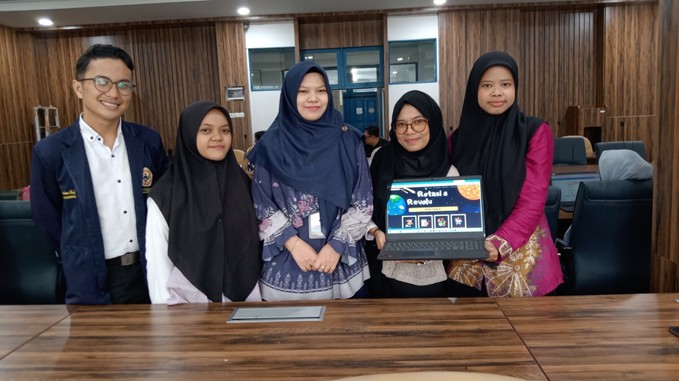
Banjarmasin, November 21, 2025 – The Ruhui Rahayu Team from the Elementary School Teacher Education (PGSD) Study Program, Faculty of Teacher Training and Education (FKIP), Lambung Mangkurat University (ULM), has successfully advanced to the final round of the 2025 Student Digital Innovation Competition (LIDM). The final will be held at PGRI Adi Buana University, Surabaya, from December 1-4.
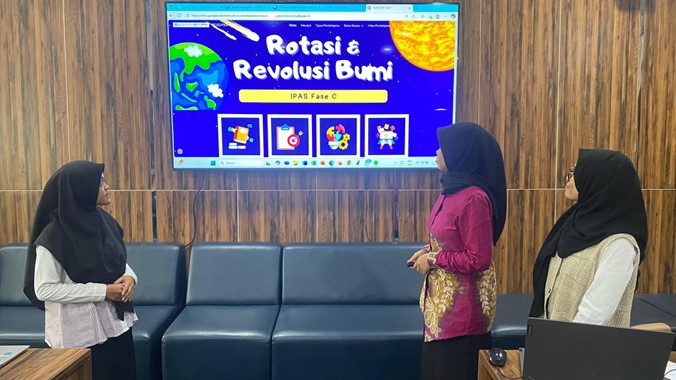
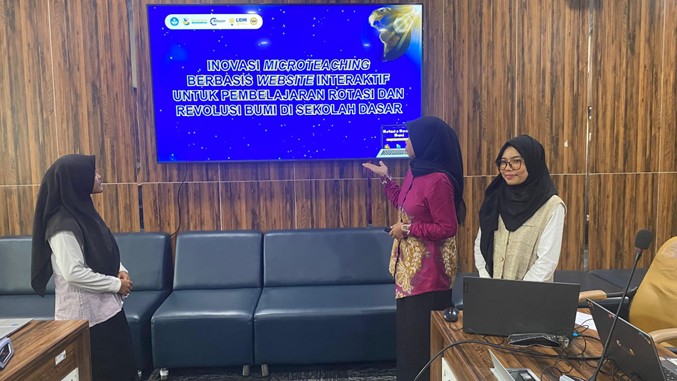
In this competition, the Ruhui Rahayu Team presented an interactive website-based microteaching innovation for learning about the Earth’s rotation and revolution in elementary schools. This idea arose from the backgrounds of the team members, who are education students. They wanted to create a learning medium that was effective, accessible, and understandable for elementary school students.
The team, consisting of Ni’matul Aufa, Maulana Rizqi, Ratri Nur Kusuma Dewi, and Mardhiyyah, initially conducted field research and observed a lack of interest in learning and low learning outcomes among students at SDN Sungai Miai 5. This research motivated them to design an interactive website that could help students learn.
“So, we initially conducted research at Sungai Miai 5 Elementary School to identify the problem, and we discovered that many sixth-grade students there were receiving low scores in the Earth’s rotation and revolution lesson. Only 12% of the students passed the initial lesson. Since we are teaching and education students, we naturally sought to find a solution to this problem. This led to the idea for this innovative interactive website,” said Ratri.
Herti Prastitasari, S.Pd., M.Pd., explained that the idea for creating an interactive website about Earth’s Rotation and Revolution came from the students themselves, while she acted solely as a supervising lecturer, helping guide them regarding the material to be included.
“The idea was their own original idea. I only helped guide them, like yesterday when they were confused about how to organize the material, and I provided input and direction,” explained Mrs. Herti.
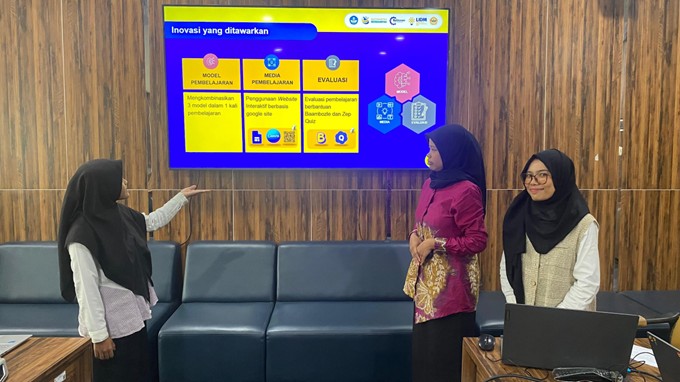
The website was designed attractively by the Ruhui Rahayu team independently using Canva and Google Slides. Google Slides was chosen based on its ease of access and use in elementary school classrooms. This digital innovation is comprehensively designed, integrating not only the Problem-Based Learning (PBL) model but also Team Games Tournament (TGM) and Mind Mapping.
This innovation has been proven to support critical and independent learning for elementary school students. A website trial, also conducted at SDN Sungai Miai 5, demonstrated a remarkable impact, increasing student completion rates from 12% to 80%. The website offers several key features: Website User Guides, Learning Objectives, Reading Materials, and Interactive Evaluations.
Strikingly, in the Reading Materials feature, the Ruhui Rahayu group presents written materials, learning videos, and songs they themselves created, to avoid copyright infringement. Furthermore, the Interactive Evaluation feature is also a draw for students, as they present it in a game format with the help of the Zep Quiz platform.
This innovation also aligns with AstaCipta and the Sustainable Development Goals (SDGs), specifically SDG 4, which focuses on Quality Education, providing access to adaptive and proven effective learning resources. Then there’s SDG 9, namely Technology and Digital Innovation through the use of websites to enrich teaching methods.
The success of the Ruhui Rahayu team as a finalist in the 2025 LIDM competition underscores Lambung Mangkurat University’s (ULM) commitment to providing an academic environment that encourages innovation, collaboration, and real-world solutions for education. ULM will continue to strengthen its support for student creativity, provide quality academic mentoring, and ensure that every idea can develop into work that provides broad benefits to society, particularly in the field of basic education. Through this ongoing support, ULM hopes to foster more student innovations to support the advancement of learning in the digital era.