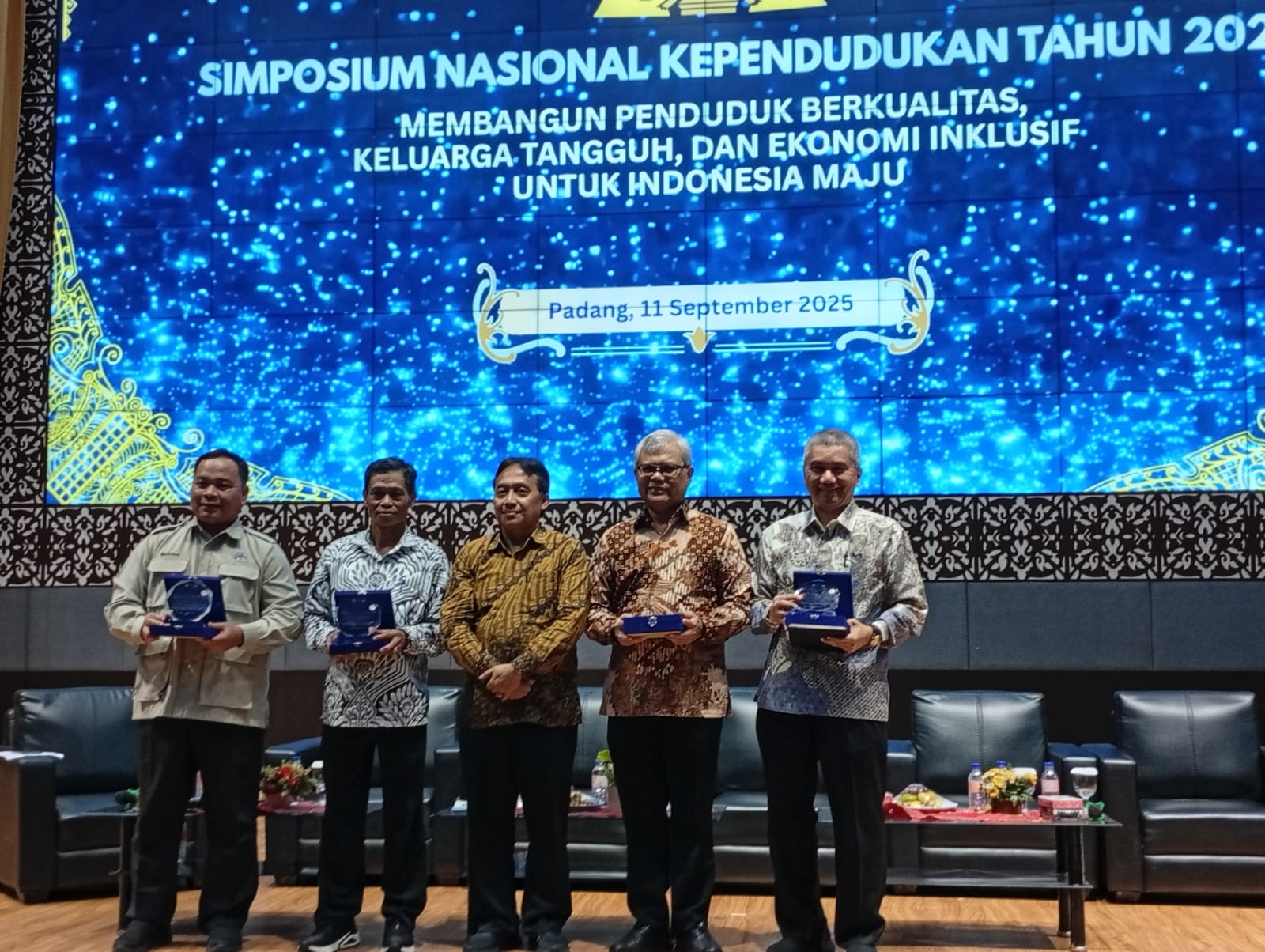
Padang – Lambung Mangkurat University (ULM) actively participated in the 2025 National Population Symposium held at Padang State University on Thursday, September 11, 2025. This event, a collaboration between Padang State University and the Ministry of Population and Family Development/BKKBN, featured 15 rectors from various state universities in Indonesia.
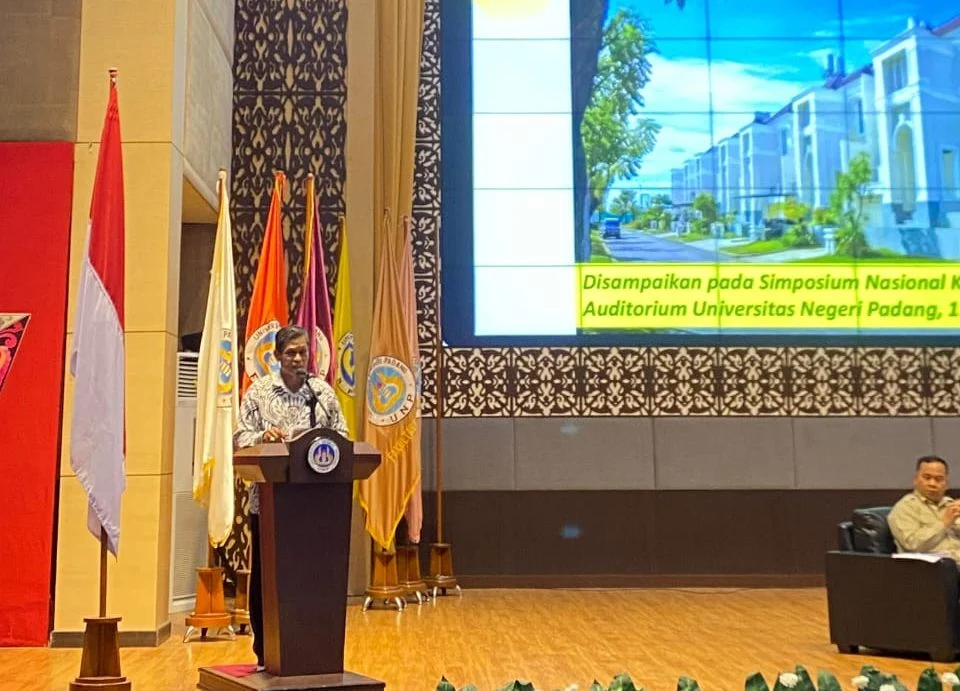
ULM Rector, Prof. Dr. Ahmad, S.E., M.Sc., spoke in the third session, along with the rectors of the University of Lampung, Malikussaleh University, Aceh, Sriwijaya University, and Sebelas Maret University. In his presentation, Prof. Ahmad presented a topic entitled “The Gini Ratio Behind Indonesia’s Economic Inequality Figures: Opportunities and Challenges for Sustainable Development in a Golden Indonesia 2045.”
According to Prof. Ahmad explained that the demographic bonus currently facing Indonesia cannot be separated from the risk of economic inequality.
“High economic growth does not automatically guarantee equitable prosperity. The main challenge of sustainable development is how to ensure inclusive economic growth so that its benefits can be felt by all levels of society,” he said.
He also emphasized that the vision of Golden Indonesia 2045 can only be achieved if the government, academics, and the community work together. This vision encompasses the realization of political sovereignty, economic resilience, and a strong cultural and maritime identity.
Furthermore, Prof. Ahmad outlined that government policies play a crucial role in reducing inequality. Several sectors that need to be strengthened include social protection and transformation, economic empowerment, and more inclusive governance.
At the conclusion of his presentation, Prof. Ahmad provided seven policy recommendations, including:
Substantial investment in human development through education and health.
Strengthening family resilience as a socio-economic unit.
Equitable distribution of development across regions to prevent concentration in certain areas.
Increased investment that encourages job creation and equal access to land ownership and intellectual property rights.
Expansion of productive labor-intensive programs, vocational training based on local needs, and support for MSMEs.
Reform of social assistance policies to make them more integrative, adaptive, and transformative.
Close collaboration between the government, academia, the private sector, and the community to realize a progressive and equitable Indonesia.
This symposium serves not only as a forum for exchanging ideas among stakeholders but also as a strategic forum to strengthen collaboration with one hundred state universities in Indonesia, in an effort to build a quality population, resilient families, and an inclusive economy for the nation’s future.