ULM–Pharos Marine Explore Collaboration on Eco-Friendly Technology for River Transportation
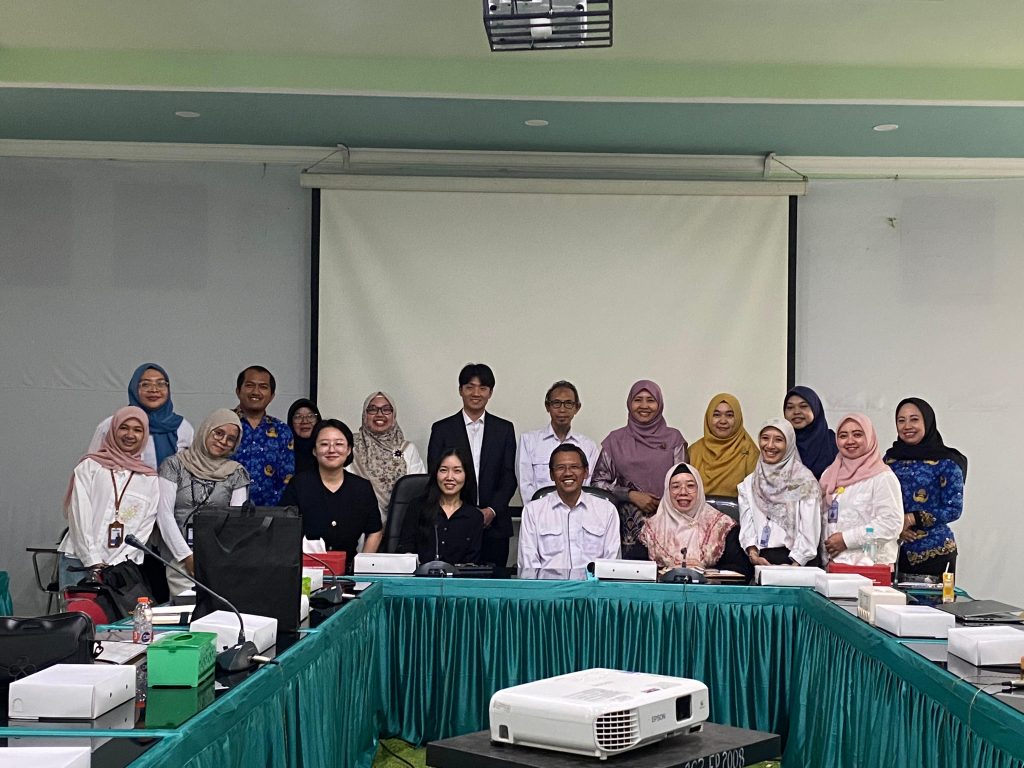
Banjarmasin – Lambung Mangkurat University (ULM) held a meeting with Pharos Marine as part of a Response to Collaboration Inquiry and Meeting Confirmation on Monday, December 8, 2025, at the ULM Faculty of Agriculture. This meeting marked the first step in exploring collaboration related to the development of environmentally friendly technology for application in river transportation in South Kalimantan.
The meeting was attended by leaders from the Faculty of Agriculture (Faperta), Faculty of Engineering (FT), Faculty of Fisheries and Marine Sciences (FPIK), as well as the Heads of the Language Lab, LLB, PPLH, the International Affairs Office (KUI), and the MBKT Team. The presence of these cross-unit representatives demonstrates ULM’s commitment to opening up strategic and multidisciplinary collaboration.
Joe, a representative of Pharos Marine, stated that their visit to Banjarmasin aimed to introduce the company profile and explore collaboration opportunities.
“We came to Banjarmasin to conduct a site assessment to see if this city is suitable for implementing the program we’re implementing in Vietnam, and whether the river waters here are similar to those in Vietnam. Banjarmasin is known as the city of a thousand rivers,” he said in English.
Pharos Marine presented several environmentally friendly equipment and technologies with the potential for application to jukung (boats) or kelotok (motorized boats), a traditional mode of transportation for river communities in Kalimantan. This technology is considered capable of reducing emissions and increasing the efficiency of water-based transportation.
The Dean of the Faculty of Engineering, ULM, Prof. Dr. Ir. Iphan Fitrian Radam, S.T., M.T., IPU., highlighted several important aspects that need to be considered before the technology can be implemented.
“It’s interesting that there’s a carbon income generation potential from utilizing this technology. But we also have to consider the condition of our rivers. This technology will be most beneficial if it can operate in shallow river waters,” he explained.
Other participants also provided input, including academics in the fields of fisheries and marine engineering, engineering, and agriculture. This audience emphasized the importance of understanding the ecological and geographical context of South Kalimantan, especially considering that the rivers in Kalimantan, particularly in Banjarmasin, have their own unique topography and characteristics, which require a balance between technological advancement and the river transportation needs of the local community.
Through this audience, ULM strengthened its role as a university actively seeking international collaboration opportunities and encouraging the development of sustainable technology. The meeting also marked ULM’s initiative to connect local needs—particularly river transportation systems—with relevant global innovations. Going forward, ULM hopes this collaboration will result in concrete projects that support sustainable development and improve the environmental quality of South Kalimantan.