Pineapple Peels Become Eco-Friendly Detergent: ULM Community Service Innovation in Barito Kuala
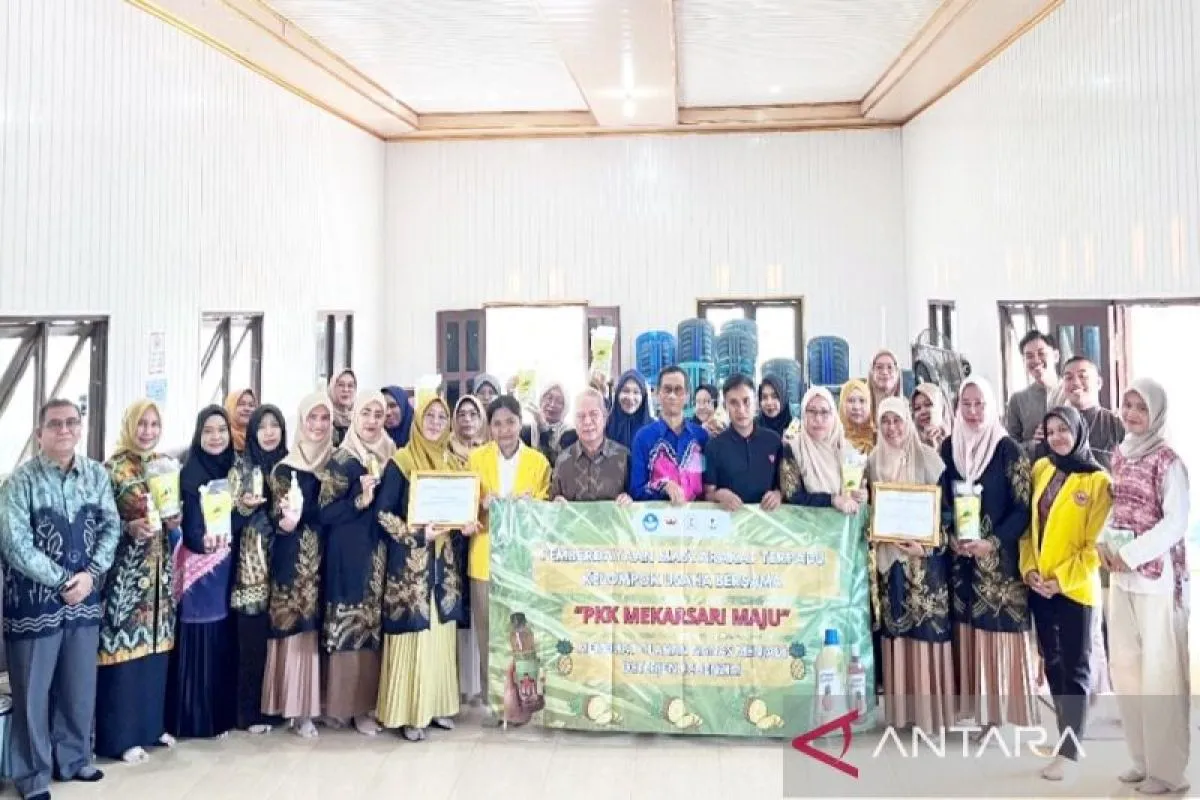
BANJARMASIN – Lambung Mangkurat University (ULM) continues to demonstrate its commitment to community empowerment through the 2025 Community Partnership Program (PKM). This time, a team of lecturers from the Faculty of Teacher Training and Education (FKIP) of ULM provided training on the production of ecoenzymes, an eco-friendly detergent made from pineapple peel waste, to residents of Tinggiran Darat Village, Mekarsari District, Barito Kuala Regency.
The activity, which ran from July to December 2025, involved a team of FKIP ULM lecturers, including Drs. H. Mahdian, M.Si., Drs. Parham Saadi, M.Si., Rizal Iskandar, S.Pd., M.Pd., Husnul Khatimah, and Alvince Stevani Lase. Through the training, residents were not only taught how to produce ecoenzymes but also provided marketing strategies to ensure the product’s competitiveness in local and regional markets.
The Acting Head of Mekarsari District, Mohtar Aini, welcomed this initiative. “This innovation has dual benefits: reducing environmental pollution while also helping the family economy,” he said.
Residents participating in the training also felt the same way. Aniswati (45), a member of the Tinggiran Darat Village Family Welfare Movement (PKK), admitted that she had just learned that pineapple peels could be processed into household products. “I didn’t expect it at first, but now I’m interested in making it an additional family business,” she said.
The Head of the ULM Community Empowerment Program (PKM) Team, Mahdian, explained that this program arose from local conditions. “tinggiran darat village is known as a pineapple plantation center in Barito Kuala, covering hundreds of hectares, so PKM with ecoenzyme production training was deemed appropriate,” he explained.
According to him, abundant pineapple production has left behind large amounts of peel waste, which has the potential to cause environmental problems. Mahdian added that the ecoenzyme innovation is not only a solution for waste management but also opens up new business opportunities.
“Simple innovations like this can be a real step in reducing organic waste while improving community welfare. We want Mekarsari to become an example of a self-sufficient and environmentally conscious village,” he said.
Through grant support from the Ministry of Higher Education, Science, and Technology, ULM hopes that this program will produce environmentally friendly products typical of Mekarsari that can become a new source of income as well as a model for empowerment based on local potential in South Kalimantan.