ULM Receives Decree on Long-Term Development Plan for Special Purpose Forest Areas (KHDTK), Ready to Become a Center for Innovation-Based Sustainable Forestry Education and Research
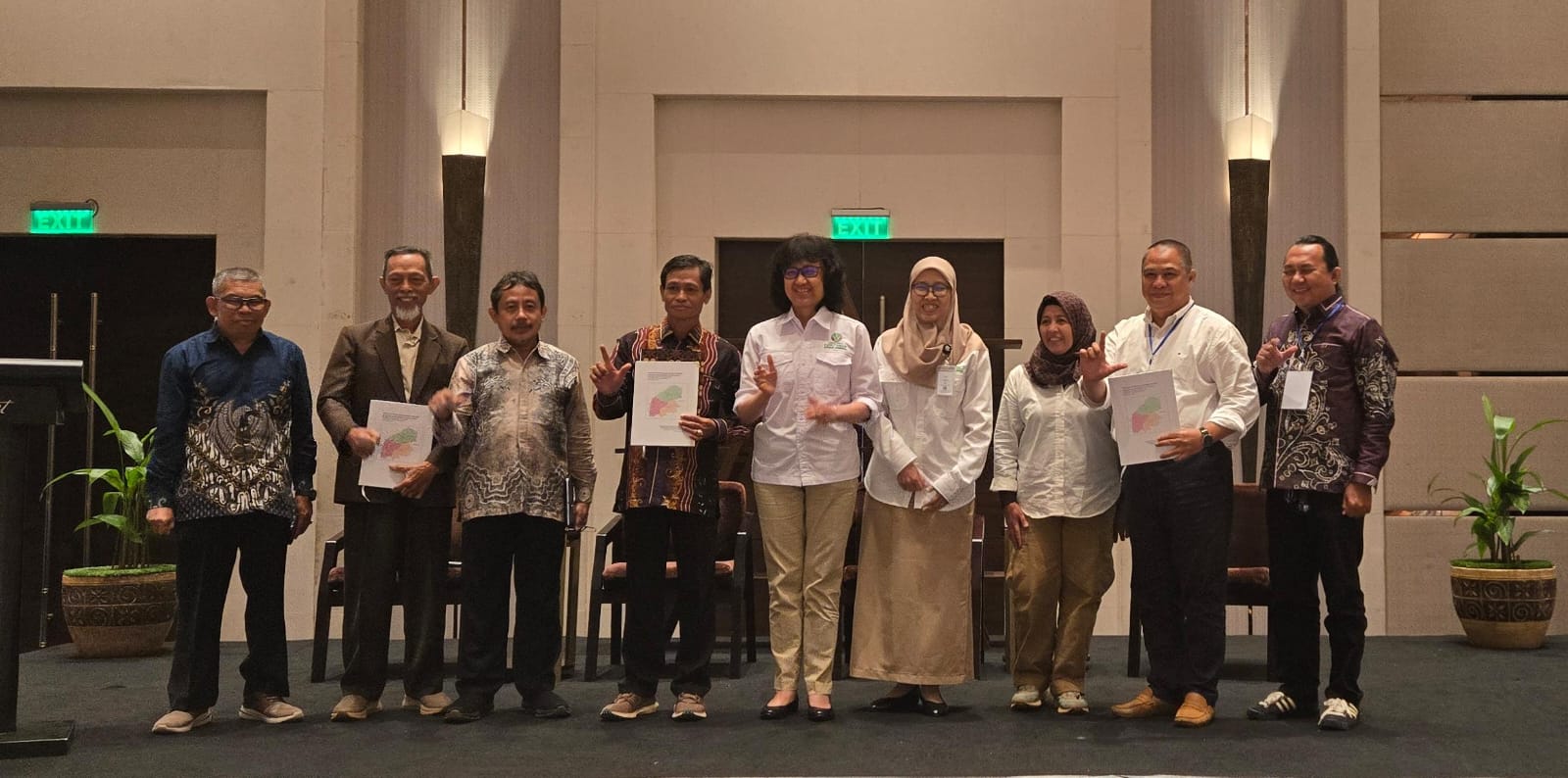
Jakarta – Lambung Mangkurat University (ULM) officially received the Decree on the Long-Term Development Plan (RPJP) for the management of Special Purpose Forest Areas (KHDTK) from the Ministry of Environment and Forestry of the Republic of Indonesia. ULM was the sole recipient of the RPJP KHDTK Decree at the 2025 KHDTK Management Coordination Meeting, held on Wednesday (August 5, 2025) in Jakarta.
The decree provides the legal and strategic basis for ULM to accelerate the development of KHDTK as a leading area for education, research, training, and community service.
The Chairperson of KHDTK ULM, Dr. Ir. H. Muhammad Helmi, M.M., stated that KHDTK ULM has a grand vision to become a global center for forestry research, education, and forestry business operations based on sustainable forest management.
According to Dr. Helmi, sustainable forest management itself has three main aspects: ecological sustainability, economic sustainability, and social and cultural sustainability.
“We designed the ULM Forest Management Unit (KHDTK ULM) as an open learning space, research site, and training center, not only for ULM students but also for the wider community. This includes a nature school program for elementary and high school students, so that the younger generation will be more concerned about forests and the environment,” he said.
The ULM Forest Management Unit (KHDTK ULM) is currently preparing several flagship programs, such as:
- Providing research sites on forest ecosystems (geology, vegetation, microclimate, soil, and others);
- A nature school and forestry educational tours for the younger generation;
- A carbon-based forest management model as a contribution to climate change mitigation;
- Community empowerment in forest border areas through economic development based on non-timber forest products and environmentally friendly agriculture.
Dr. Helmi stated that going forward, the ULM KHDTK will be implemented using the “KHDTK 2.0” approach, in accordance with the direction of the Head of the Ministry of Environment and Forestry’s Human Resources Development Agency (BP2SDM), namely innovation- and collaboration-based management. ULM is open to collaboration with various parties, including local governments, the private sector, non-profit organizations, cooperatives, and international partners, while prioritizing four main pillars: education, research, training, and community service.
“With this RPJP Decree, we will begin implementing all the flagship programs that have been designed, and ensure the sustainability and value of the KHDTK for the university and the community,” Helmi added.
The ULM KHDTK is a concrete example of the transformation of campus science into research-based business and community development (university research to business operations). ULM is committed to making this area a living laboratory for the development of tropical forestry science and sustainable development in Indonesia.
With this step, Lambung Mangkurat University further affirms its role as a leading actor in environmental conservation, educational innovation, and forest resource-based community empowerment.