Japin Carita, More Than Just a Story
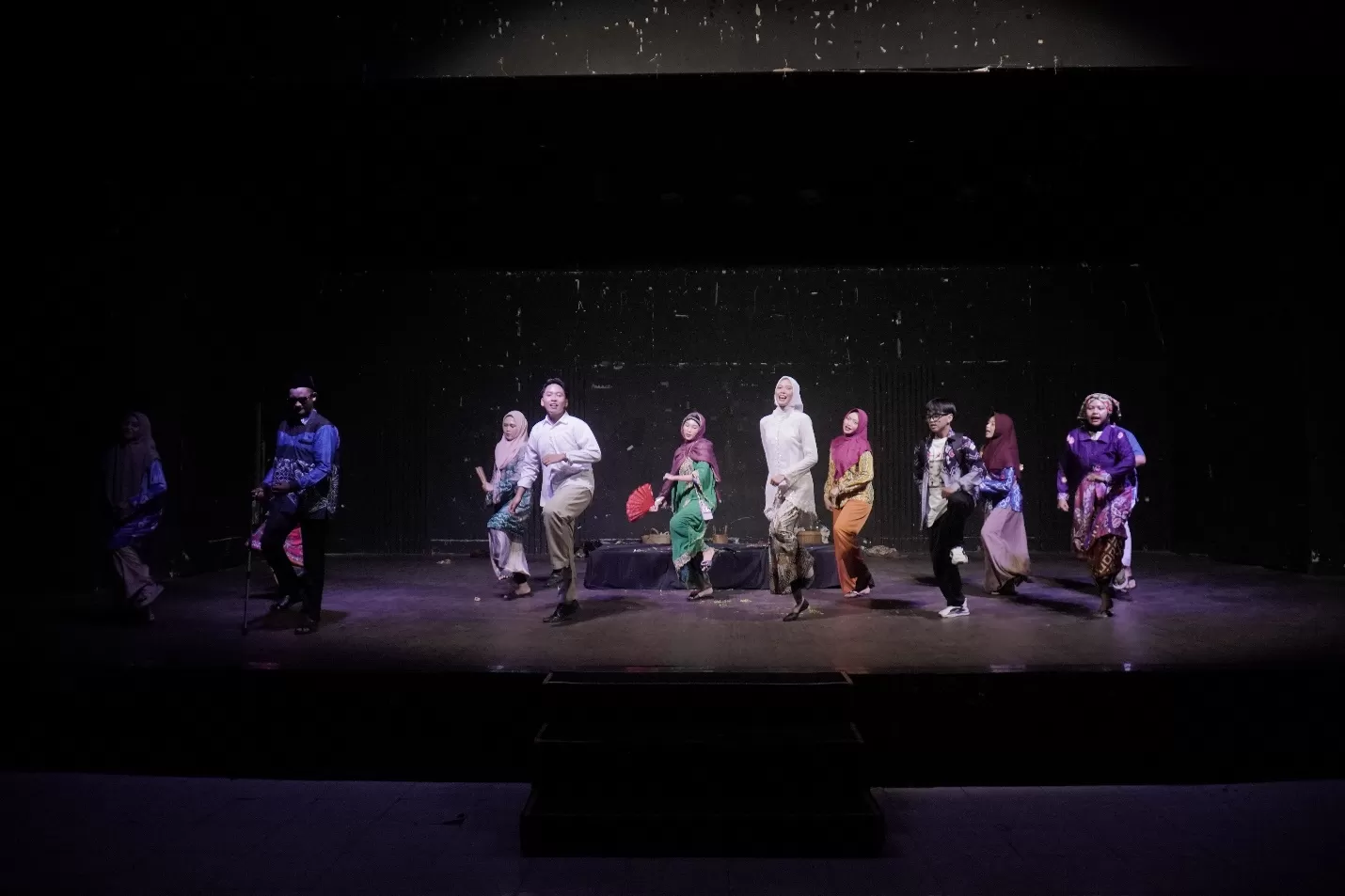
The tide of modernization and the dominance of digital popular culture have alienated the younger generation from traditional arts. Various local arts that were once part of everyday life are now more often featured as accompaniments to ceremonies or seasonal festivals. One such performance is Japin Carita, a form of South Kalimantan folk theater that combines dance, traditional music, and life stories.
Recently, Japin Carita was performed again by students from Lambung Mangkurat University. The performance was not simply a demonstration of artistic skill, but a sign that local arts still have a place to grow and be recognized again. Behind the movements, rhythms, and dialogue, there is an implicit effort to revive a cultural heritage that is fading from the social sphere.
Far from mere spectacle, Japin Carita holds a wealth of cultural values that should be fought for. This art form is not just about rhythmic dance movements or melodious traditional music, but rather a way for a community to convey life lessons through performance. In every Japin Carita play, there’s a moral message, social satire, and even criticism, all packaged in a humorous and entertaining way.
More than that, Japin Carita demonstrates how traditional art can be a clever medium of communication: combining aesthetics, regional language, and local wisdom on one stage. Unfortunately, this richness is often forgotten, even by the local people themselves. As global narratives continue to push through gadgets and screens, local narratives like Japin Carita lose their place, not because they can’t compete, but because they’re no longer championed.
One of the ironies of cultural preservation is that when people are proud of their artistic heritage, they are reluctant to participate in efforts to preserve it. Many traditional arts are only presented on special occasions, as a complement to ceremonies or annual competitions, and then forgotten. Japin Carita experiences a similar situation: it’s often referred to as South Kalimantan culture, yet it’s rarely studied, practiced, let alone actively passed down.
This crisis isn’t simply a matter of the younger generation’s interest, but rather a collective failure to build a vibrant cultural ecosystem. When art is positioned solely as a symbol of identity, rather than a part of everyday life, what remains is pride without depth. Preservation requires more than mere documentation or momentary performances; it demands involvement, space for process, and continuity across generations.
The involvement of the younger generation in the Japin Carita performance demonstrates that cultural heritage has not completely lost its vitality. When young people are given the space to understand, cultivate, and perform traditional arts with a contemporary approach, they become not only inheritors but also active participants in maintaining their sustainability. This effort demonstrates that preservation is not merely a matter of nostalgia, but also the courage to preserve values that are starting to be forgotten.
Cultural preservation requires long-term support. Local governments, educational institutions, and local media play a crucial role as drivers of the process, not just organizers of annual events. The existence of open arts spaces, ongoing training, and tangible mentoring are key to ensuring that arts like Japin Carita continue to grow alongside the community.
Preserving tradition is not just about maintaining its outward form, but also ensuring that its values remain relevant and alive in the collective consciousness. Japin Carita is a facet of Banjar culture that is not only worthy of pride but also deserves continued nurturing through intergenerational involvement. When traditions are given a place in community life, they will not disappear, but will adapt, develop, and survive.
It is time for cultural preservation to go beyond discourse and ceremony. Concrete, collaborative, and consistent steps are needed to ensure arts like Japin Carita become part of everyday life once again. A living tradition is one that is fought for, not merely remembered.
By: Muhammad Raihan
Student of Indonesian Language and Literature Education, Faculty of Teacher Training and Education, ULM Banjarmasin
Member of the Wikimedia and Pesatir communities