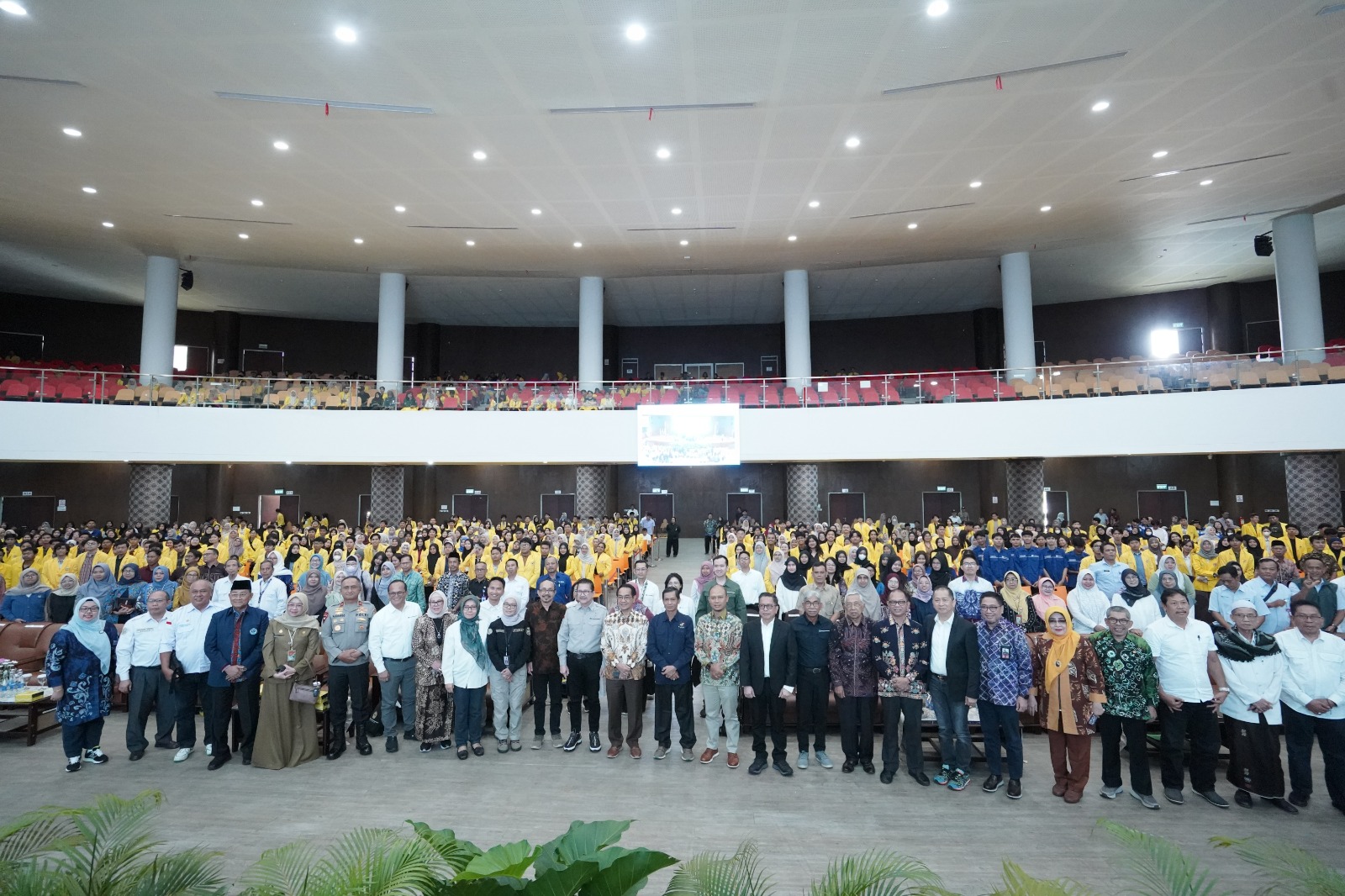
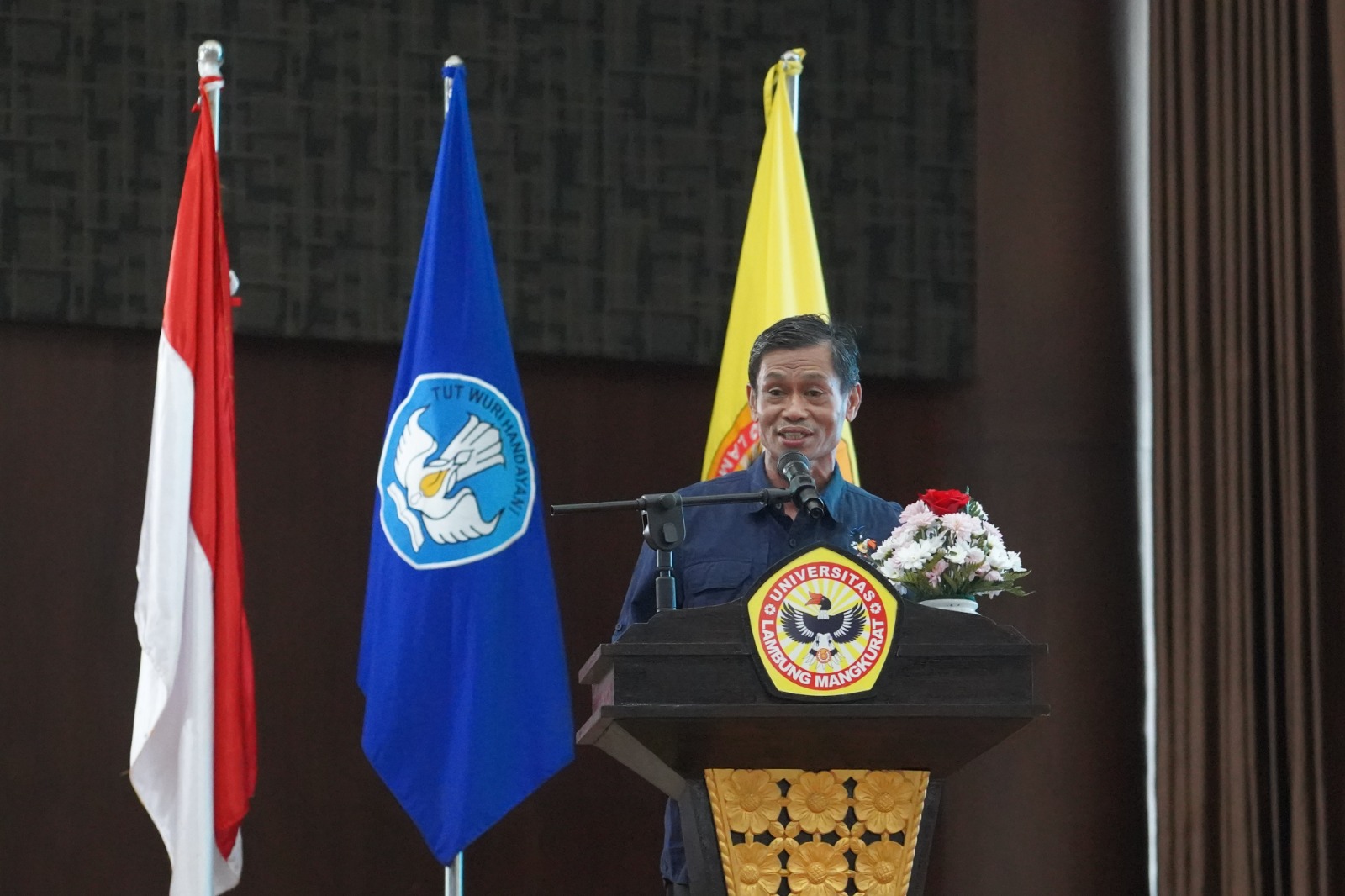
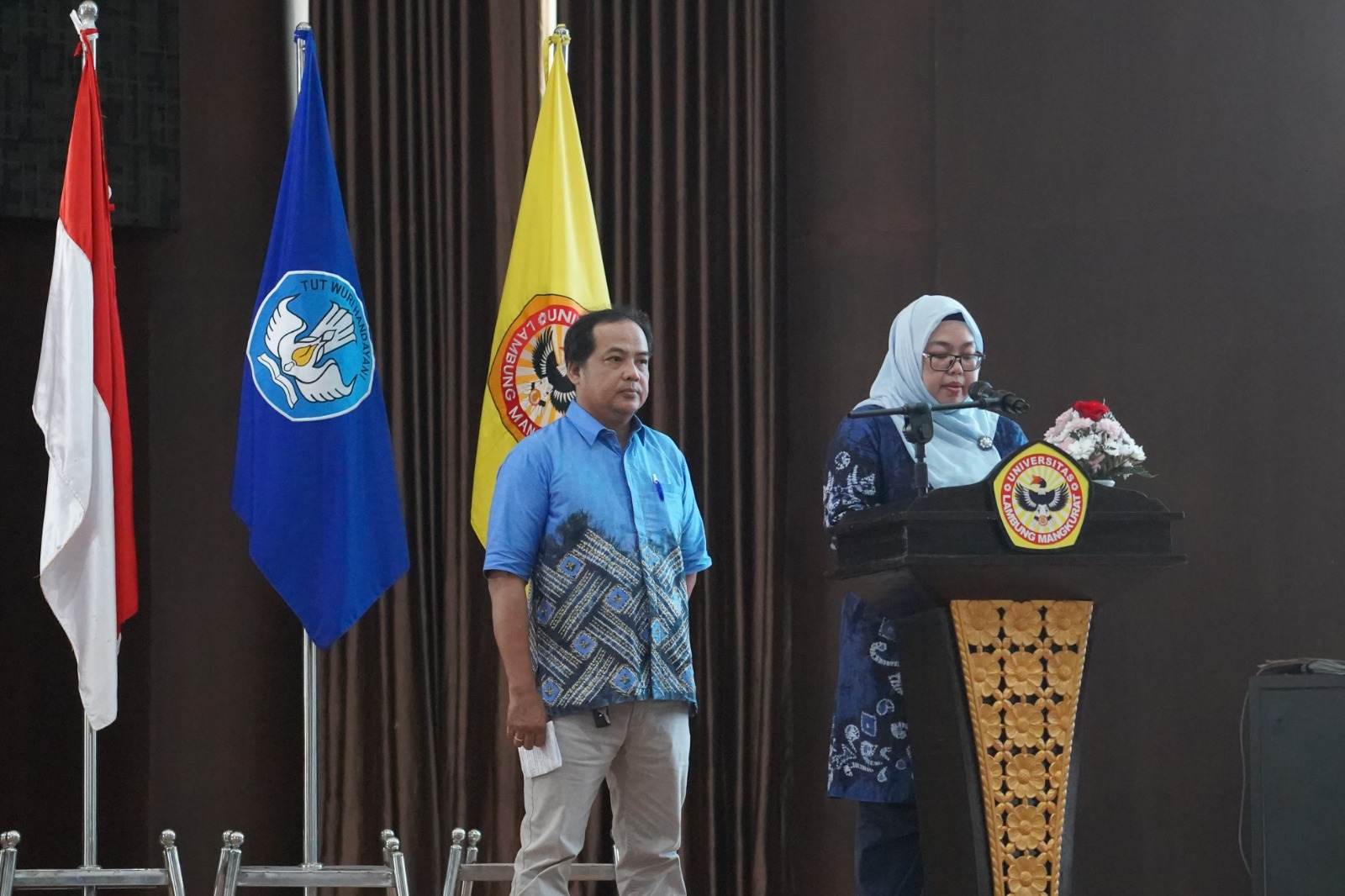
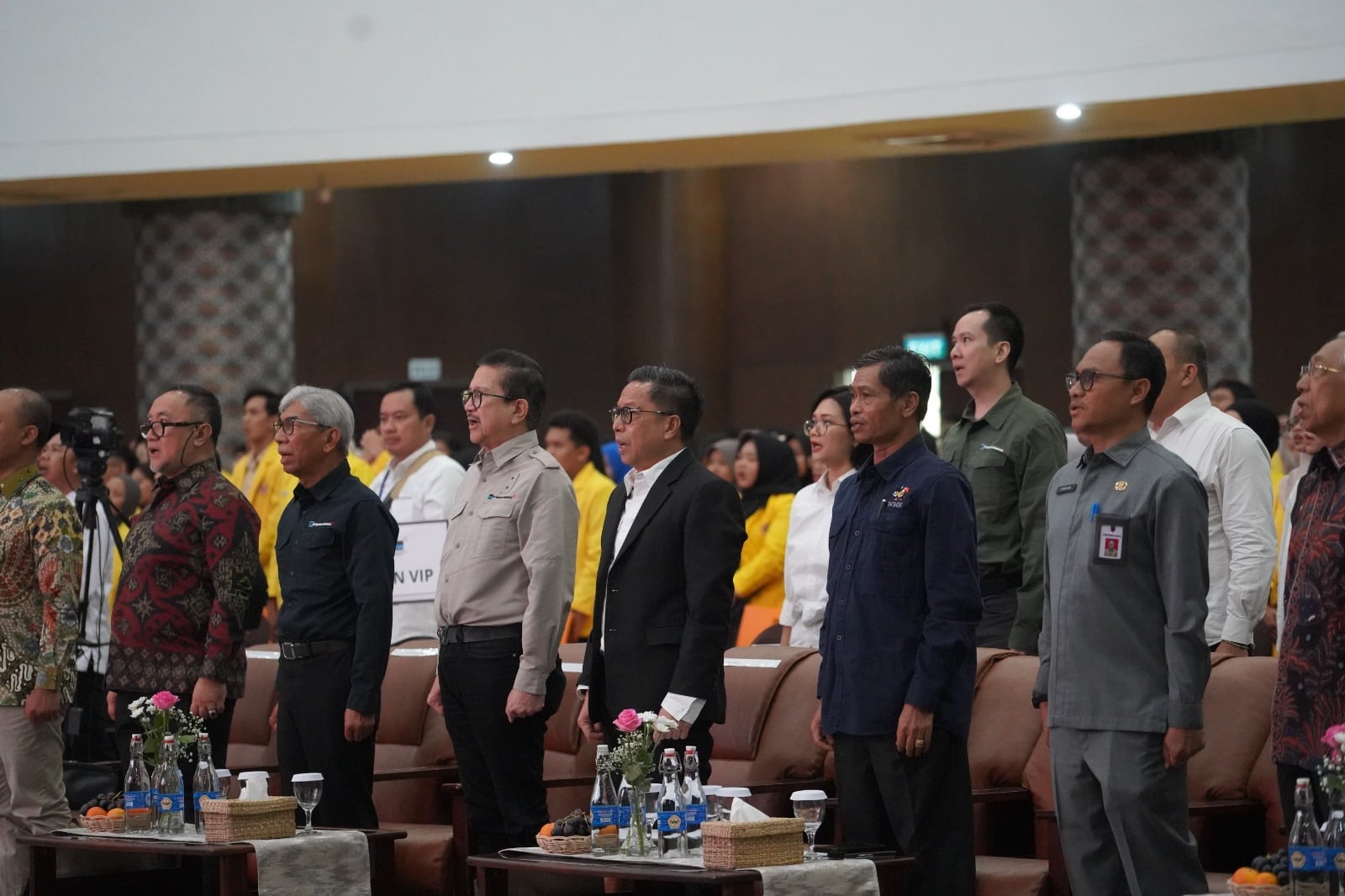
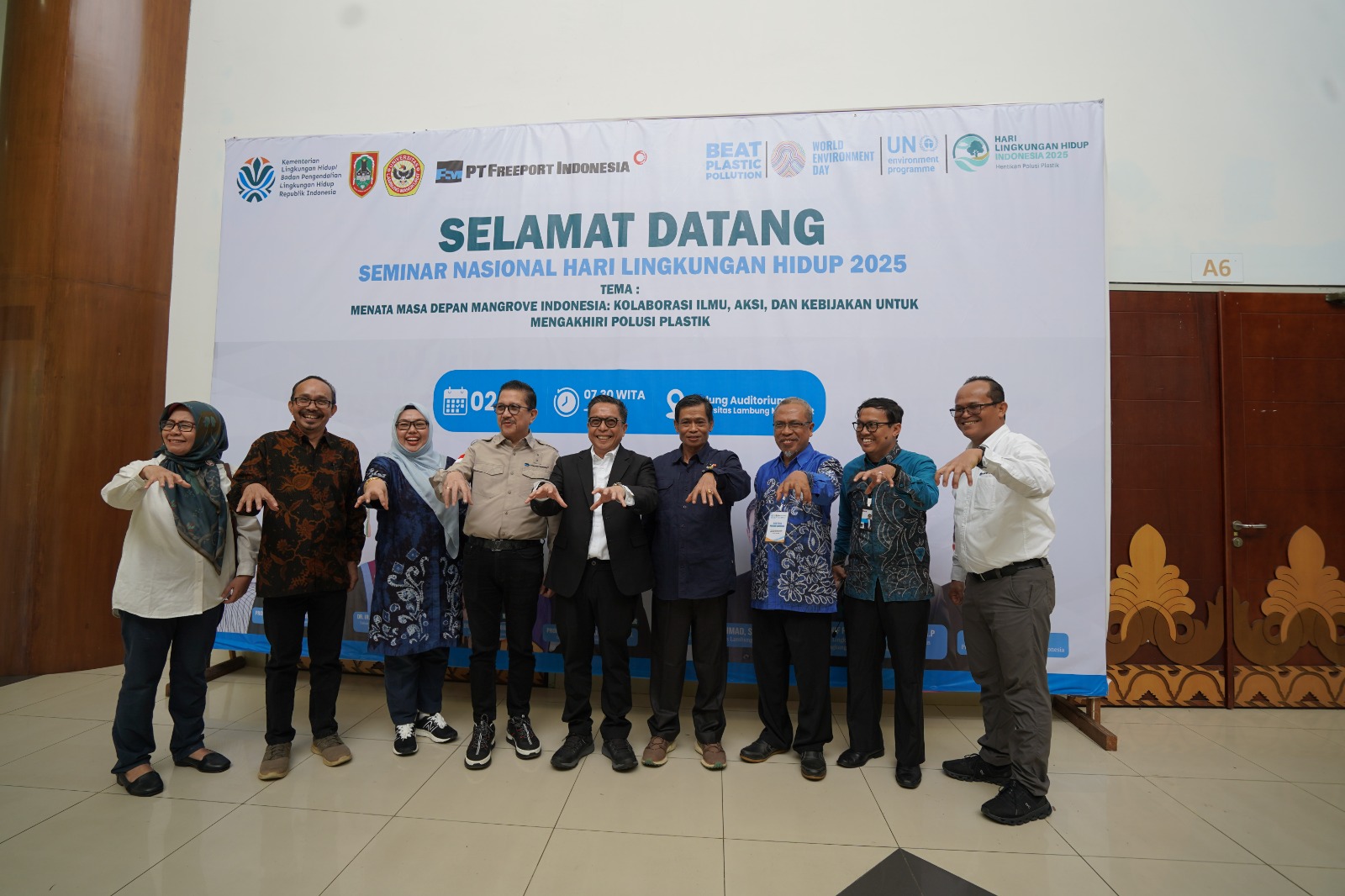
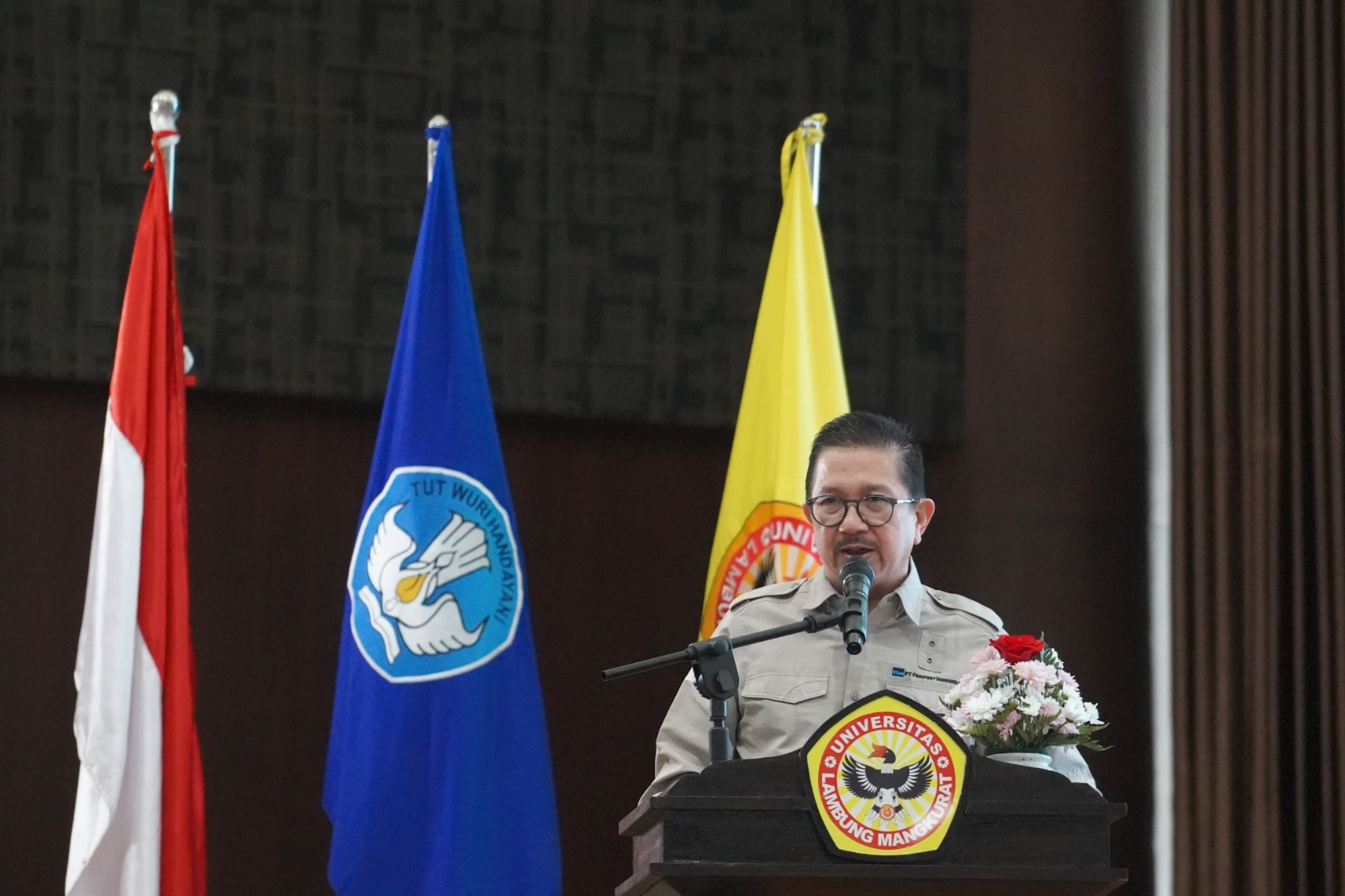
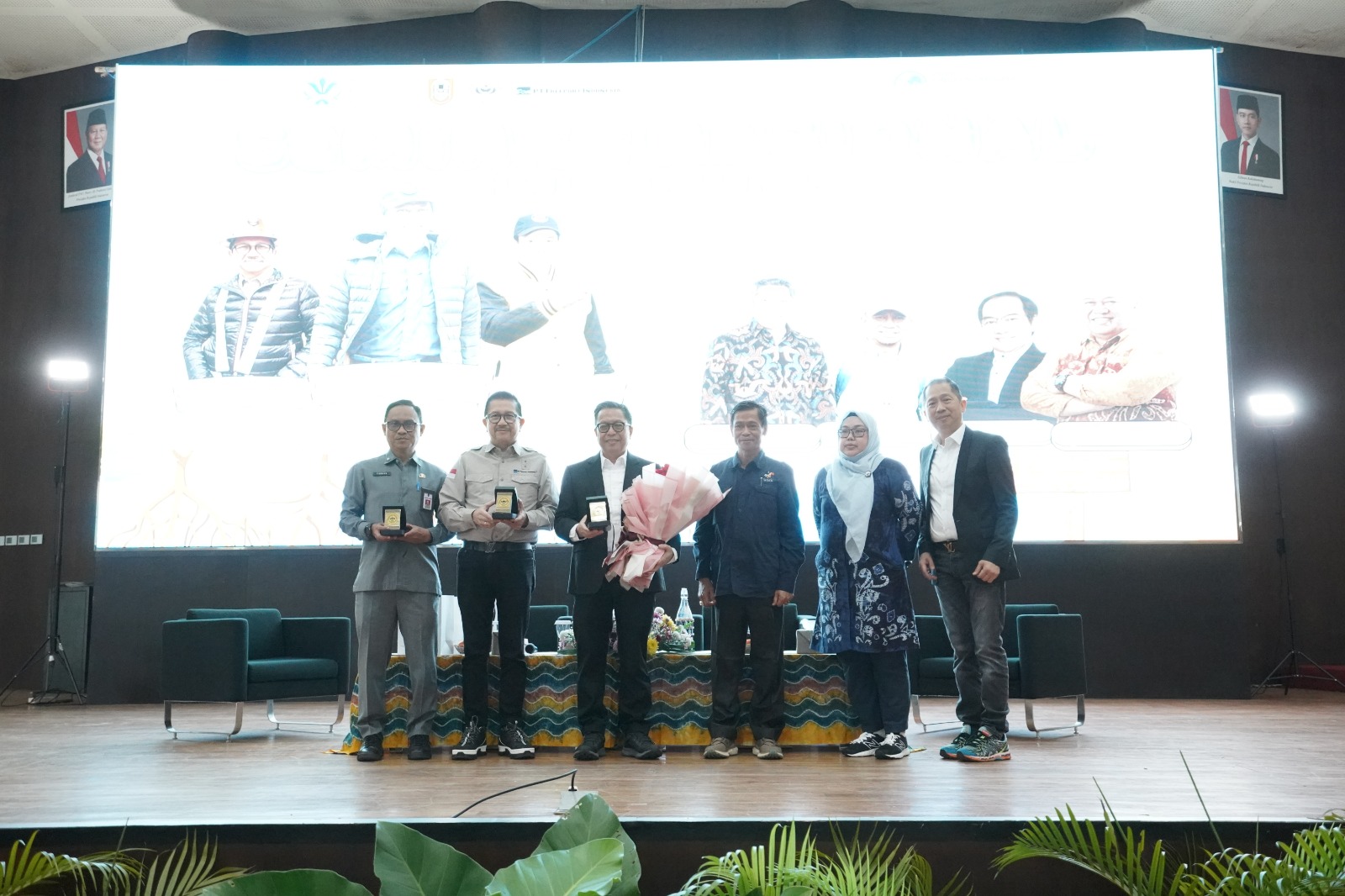
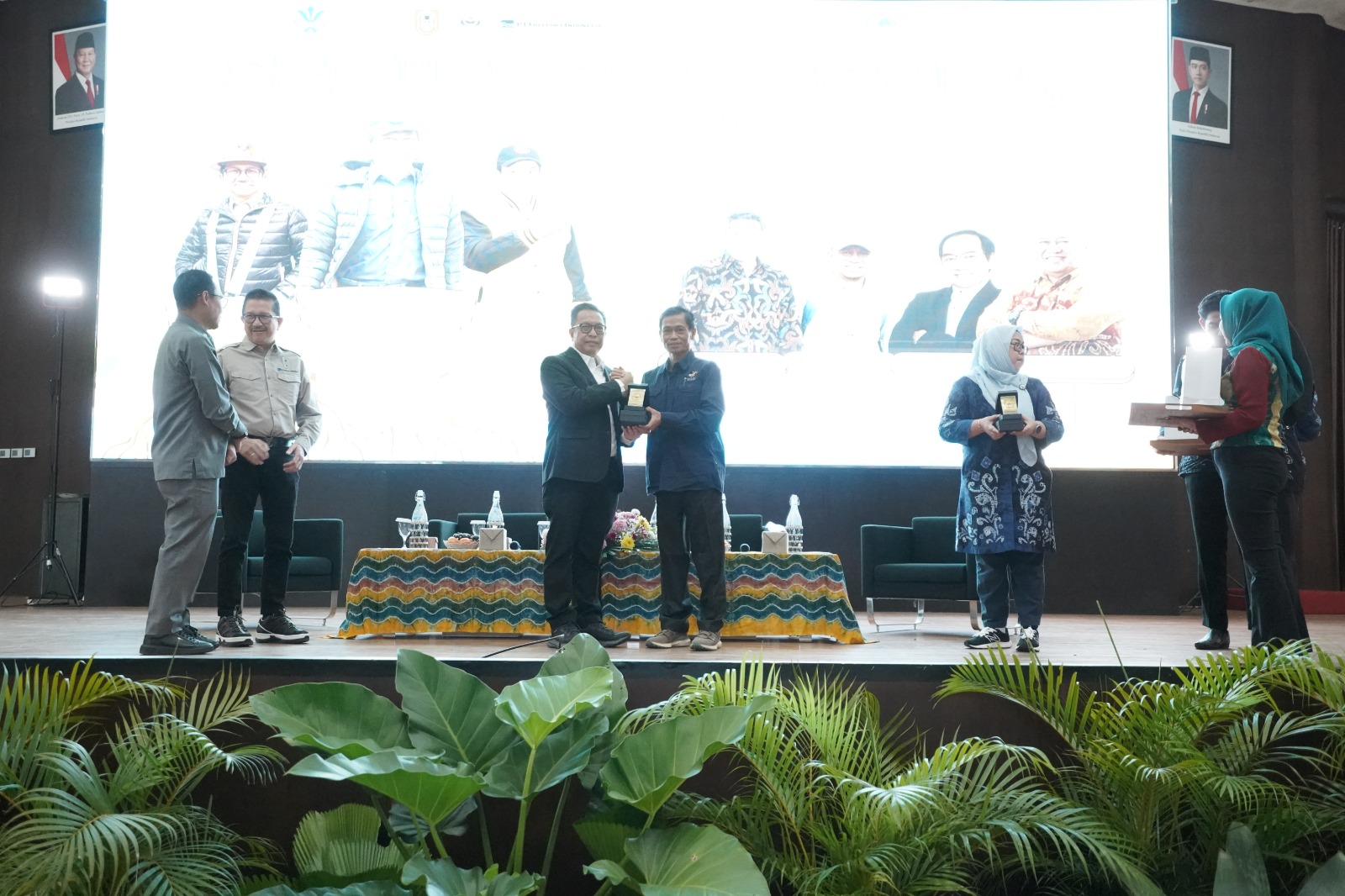
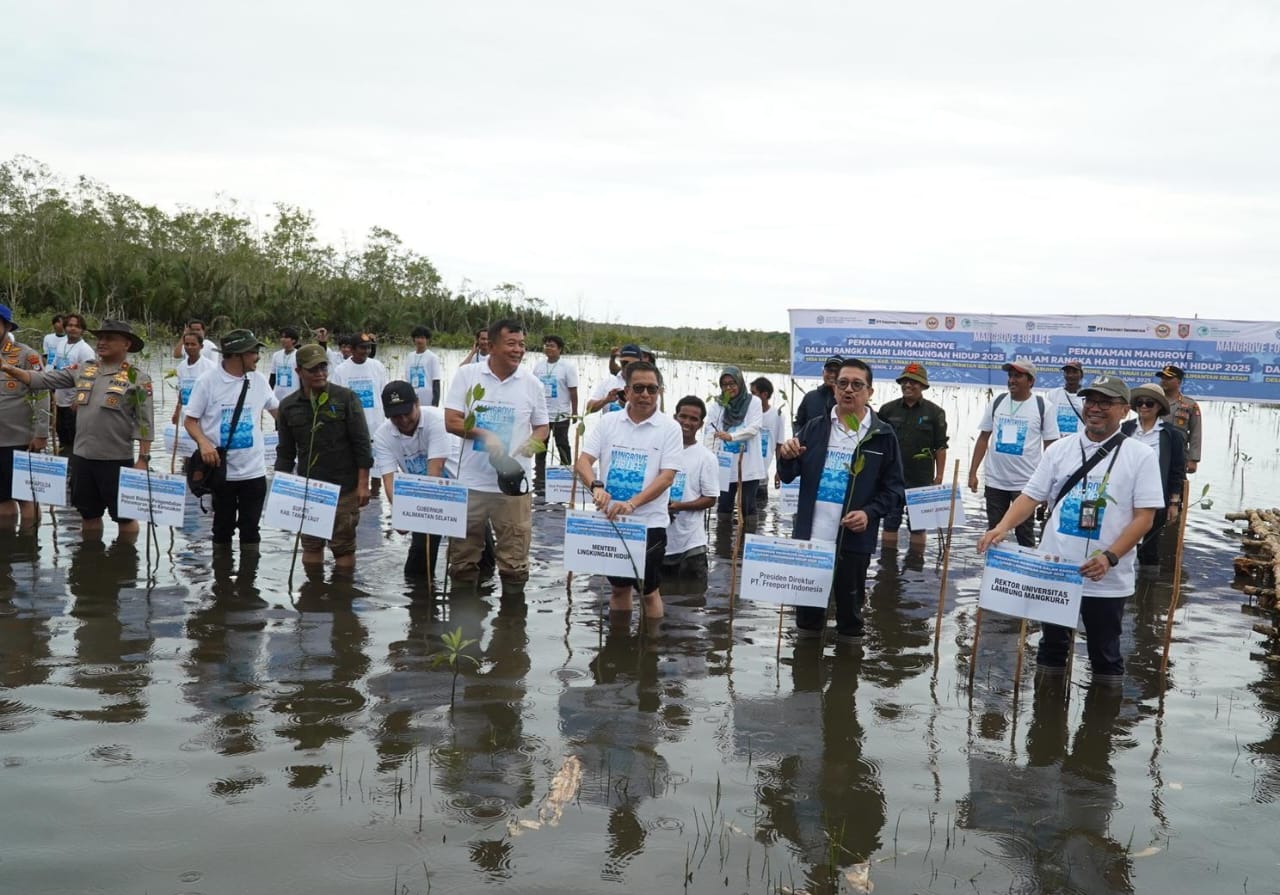
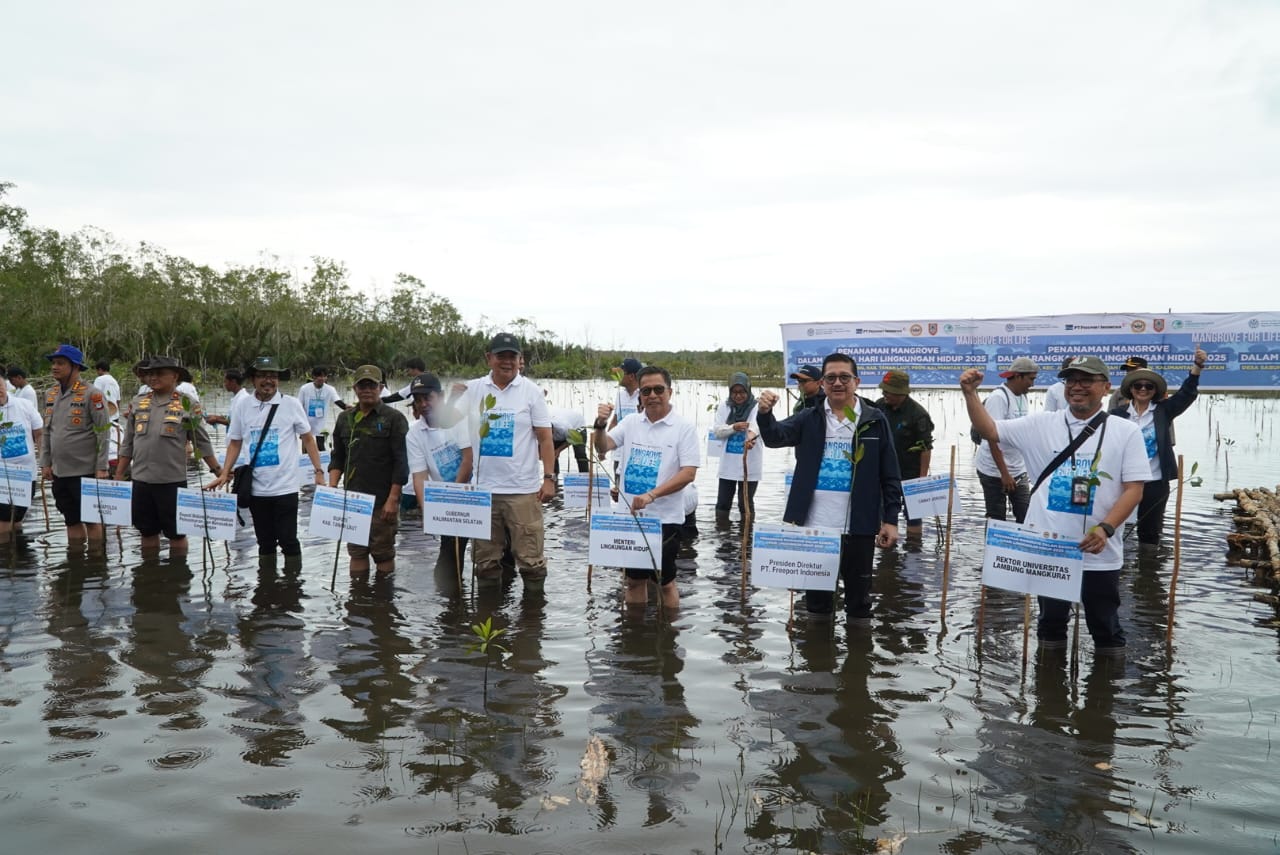
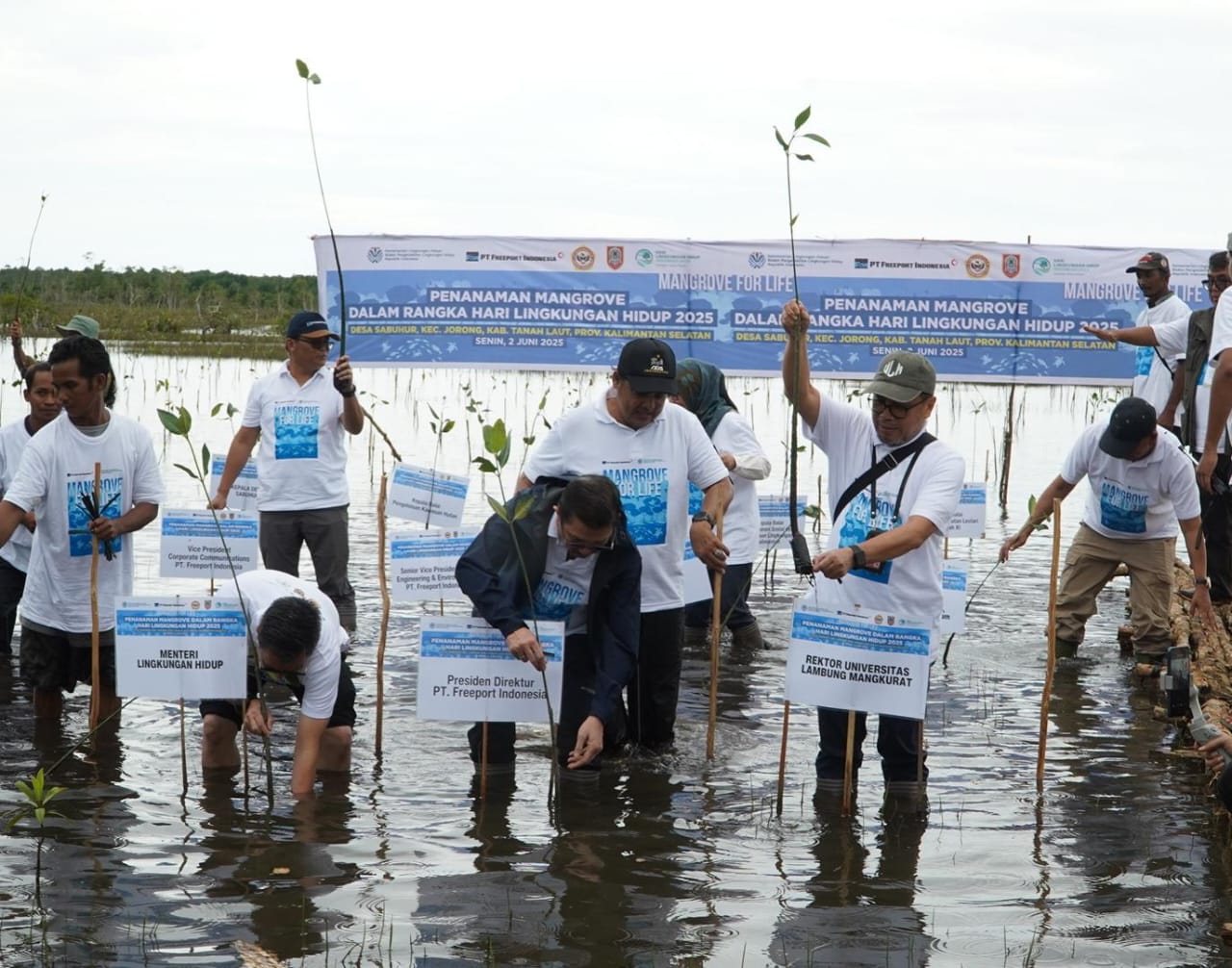
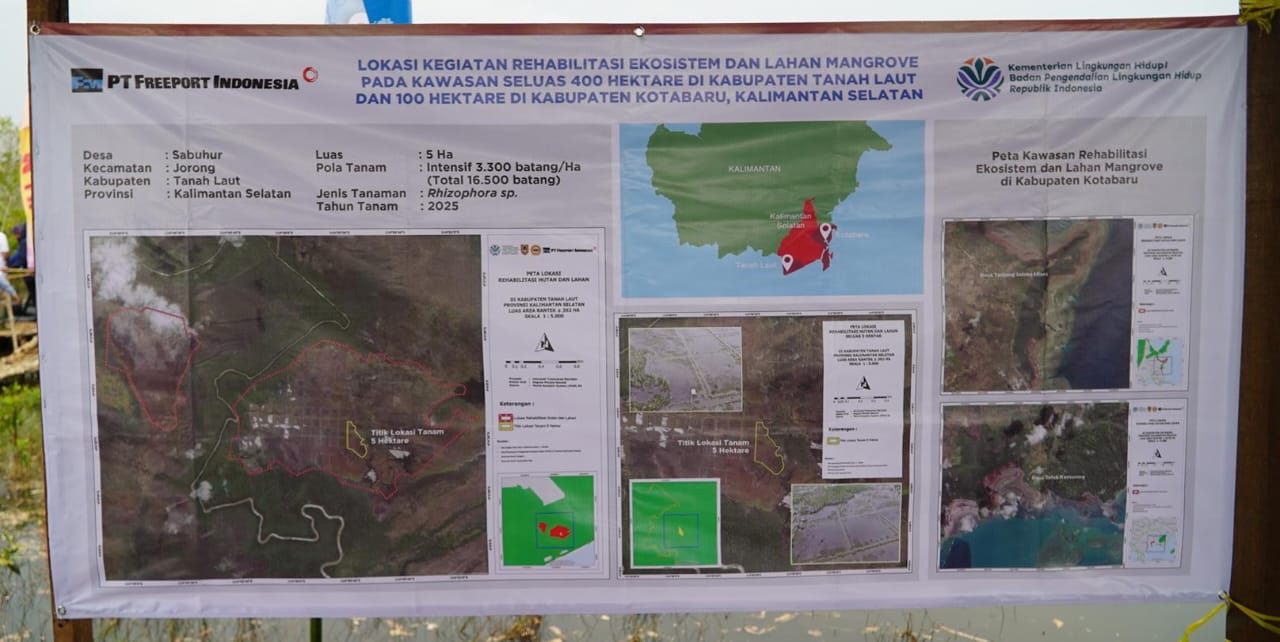
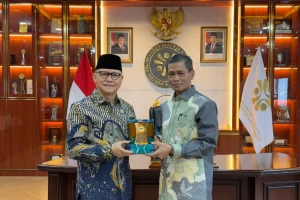
Banjarmasin – In order to commemorate World Environment Day, Lambung Mangkurat University (ULM) in collaboration with the Ministry of Environment and Forestry (KLHK) and PT Freeport Indonesia held a National Seminar themed “Designing the Future of Indonesian Mangroves: Collaboration of Science, Action, and Policy to End Plastic Pollution”. The seminar was held at the ULM Banjarmasin Auditorium, Monday (02/06/2025), followed by the planting of 16,500 mangrove seedlings in Sabuhur Village, Jorong District, Tanah Laut Regency, as a real action for coastal conservation.
This national seminar presented various national figures from the government, academic world, and private sector, including the Deputy of the Ministry of Environment and Forestry (KLHK) Dr. Rasio Ridho Sani, M.Com., MPM, Plt. Assistant for Government and Social Welfare of South Kalimantan Province Muhammad Farhani, S.P., M.M. (representing the Governor), and President Director of PT Freeport Indonesia Tony Wenas.
The national seminar was moderated by Prof. Dr. Ir. Syarifuddin Kadir, M.Si with speakers including:
Ir. Untung Bijaksana, M.P. (Dean of the Faculty of Fisheries and Marine ULM),
Dr. Ir. Jamaluddin Jompa, M.Sc. (Rector of Hasanuddin University),
Dr. Denny Nugroho, S.T., M.Si. (Professor of Diponegoro University).
The chair of the seminar committee, Dr. Eng. Maya Amalia, S.T., M.Eng., emphasized the importance of synergy between academics, industry, and government to face threats to the mangrove ecosystem.
“This forum was born from a collective awareness of the environmental crisis we are facing, especially plastic pollution in coastal areas. We hope that the results of this forum can become a model for cross-sector collaboration that can be replicated in various regions,” explained Maya.
As a concrete form of the seminar, 16,500 mangrove seedlings were planted on the coast of Sabuhur Village, Tanah Laut Regency. This activity was led by Nursalam, S.Kel., M.S., as the head of the planting activity.
“This planting is not just symbolic, but a form of collaboration between the business world, campus world, government, and the community. Sabuhur Village was chosen because it is a potential mangrove area but is facing pressure due to climate change and human activities,” said Nursalam.
According to him, mangroves are not only important for preventing abrasion and maintaining the coastline, but also act as carbon absorbers, plastic pollution filters, and economic and ecotourism sources for the surrounding community.
ULM Rector, Prof. Dr. Ahmad Alim Bachri, S.E., M.Sc., emphasized the campus’ commitment to preserving the environment. He revealed that ULM has 614 hectares of mangrove land in Kotabaru, which has been designated by the Ministry of Environment and Forestry as the Indonesian Tropical Mangrove Laboratory for the World.
“Environmental damage is a national issue. ULM is ready to play an active role in conservation through education, research, and field action,” said the Rector.
Meanwhile, the Deputy of the Ministry of Environment and Forestry, Dr. Ratio Ridho Sani, who was present representing the Minister of Environment and Forestry, highlighted the importance of changing people’s consumption patterns and the responsibility of producers in handling plastic waste.
“We need to stop the use of single-use plastic and encourage producer responsibility in recalling packaging. Law enforcement against open dumping practices will also be strengthened,” he said in his remarks.
President Director of PT Freeport Indonesia, Tony Wenas, emphasized that the company’s success must be in line with environmental and community sustainability.
“Our production may stop in 2041, but the ecosystem must not stop. This mangrove planting is part of our responsibility for safe and sustainable production,” explained Tony.
This activity is not only a ceremonial momentum, but is expected to be the beginning of a sustainable movement in saving Indonesia’s coastal ecosystem, especially from the threat of plastic pollution and climate change.
This seminar and planting reflect the spirit of collaboration in responding to environmental challenges holistically. ULM, as a research and action-based university, shows its role in building awareness and real solutions for the future of Indonesia’s environment.
“Let’s care for and preserve mangroves for our children and grandchildren,” concluded Nursalam.