Impactful Campus, Not Just Academic
Education is not only organized by the state, but is driven by the participation of the universe, namely the people, communities, the business world, and campuses as hubs of knowledge and innovation. As a message from nature and the sky that lifelong education is inherent in every human being.
However, to realize quality education that is equitable and inclusive, universities can no longer stand on ivory towers. This is the context of the birth of a new initiative by the Ministry of Higher Education, Science, and Technology, namely “Impactful Campus.”
A policy that shifts the paradigm of higher education from being merely an academic center to a real agent of change in society. For decades, Higher Education in Indonesia has grown with high academic enthusiasm.
Scientific publications and international rankings are the benchmarks of achievement. However, these achievements are often not in line with the quality of life of the community around the campus. In the midst of academic achievement, there are still many poor people around the campus fence who are not touched by community service programs. Ironically, the campus grows, but its impact is not felt. That is the paradox of the ivory tower, with a high place that produces scientists, but is foreign to its people.
When campuses are too busy pursuing accreditation scores and reputable journals, social orientation is eroded. This is what the “Impact Campus” initiative aims to overhaul. The “Impact Campus” initiative was born from the awareness that science must be relevant and down-to-earth. It is not enough to just produce graduates, campuses must produce solutions.
Students must learn from social realities, not just from textbooks. Lecturers do not only research in laboratories, but are present in villages, markets, and marginal communities. “Impact Campus” encourages synergy between the three pillars, namely teaching, research, and community service, which are based on community needs.
For example, campuses with faculties and agricultural study programs develop regenerative agriculture in villages, campuses with faculties and legal study programs become advocates for vulnerable communities, campuses with faculties and technology study programs help MSMEs go digital.
Tridharma activities are no longer ceremonial agendas, but real processes of community empowerment. Furthermore, “Impact Campus” also breaks down bureaucratic walls. The curriculum is now open to community-based learning programs, living labs, and social innovation incubators.
Students are invited to be directly involved in local development projects with cross-disciplinary guidance. Universities must transform into life learning spaces, not just academic learning.
Now the paradigm of the campus in terms of higher education must change. Why must campuses change? Because universal participation demands inclusivity. Quality education should not be a monopoly of elite universities. There must be a bridge between knowledge and social justice.
All components of the nation, namely Lecturers, Teachers, Researchers, Teachers, Traditional Figures, Education Volunteers, Families, and even students themselves are important actors in the education ecosystem. Quality education is not identical to luxury buildings or international rankings.
Quality education means relevant, liberating and just. So universal participation is not only about who is involved, but how the education process is designed together.
The campus must open itself to become a big house of collaboration where knowledge, local experience, and people’s aspirations meet. The campus must be a pioneer, not wait for direction.
With the “Impact Campus” initiative, let us build new spaces where students are not just prospective workers, but agents of change where lecturers are not just teachers, but facilitators of empowerment and where knowledge is not just an accumulation of data, but a tool for the struggle for a better life.
In the Impact Campus initiative launched by the Ministry of Higher Education, Science, and Technology, universities are directed to become centers of solutions, not just ivory towers.
With the spirit and fragrance of “Harapan Semesta” by strengthening the collaboration of all elements of the nation in realizing quality education for all. In this context, lecturers and lecturer practitioners become key figures in the Impact Campus.
This is part of the great spirit of “Harapan Semesta” by strengthening the collaboration of all elements of the nation in realizing quality education for all. In this framework, lecturers and lecturer practitioners become key figures of change.
Lecturers are no longer sufficient as transmitters of knowledge in class. They are required to become facilitators of contextual learning by linking theory to the social, economic, and cultural dynamics of society.
In the “Impact Campus” scheme, Lecturers actively bring students into the field, integrate courses with empowerment projects, and facilitate dialogue between campus and community.
Lecturers play an important role in creating research that has real impact. Not just publication for accreditation, but research that directly touches on community issues, whether in the form of sustainable agricultural innovation, waste processing technology, alternative education models in the regions, or MSME digitalization strategies.
In this context, lecturers bridge knowledge and community needs. Practitioner Lecturers are professionals from the world of work who also teach at universities who have a strategic position as a link between the real world and the academic world. They bring direct experience, current cases, and industry networks to the classroom.
Their presence ensures that the curriculum and learning are always relevant and applicable. Lecturers and Practitioner Lecturers are the driving force for multi-party collaboration in the learning process.
They build connections with the Regional Government, the business world, NGOs, and indigenous communities to create a participatory learning model, with the spirit of universal participation, learning becomes a living and down-to-earth social ecosystem.
In the era of “Impact Campus”, Lecturers also act as entrepreneurial mentors. They guide students not only to become job seekers, but job creators.
Lecturers encourage the birth of studentpreneurs, young innovators, and drivers of social change from campus. Practitioner Lecturers strengthen this process with real experiences from the industrial, legal, health, and technology sectors.
Let us reignite the spirit of Ki Hadjar Dewantara, that education is a guide in the life of the growth of the Nusantara generation. Growing means living, moving, and having an impact, not just memorizing knowledge, but forming personality, strengthening identity, and igniting the light of change in society.
In the spirit of “Harapan Semesta” and the “Impact Campus” initiative from the Ministry of Higher Education, Science, and Technology, we are invited to leave the ivory tower paradigm towards a campus that is present and rooted. A campus that is not only a center of knowledge, but also a place of hope, a spark of change, and a locomotive for regional progress.
This is the time for us to read and apply the Nusantara Constitutional Theory, that before this country was formally established, the basic values of life together had grown in mutual cooperation, deliberation, and local wisdom.
An impactful campus is the embodiment of grassroots constitutionalism with higher education that upholds the values of people’s lives, is one with the pulse of the village, and honors human dignity.
Education does not stand alone, but is integrated into social ethics, law, and spirituality. If today’s campus wants to have an impact, then it must touch this dimension by forming a whole person, who is not only intelligent in thinking, but noble in acting. The campus must be present as a connector of history and civilization, bridging modern science with local cultural roots. Only then can Indonesia produce a generation that is free in thinking, independent in acting, and sovereign in building the future.
Written by:
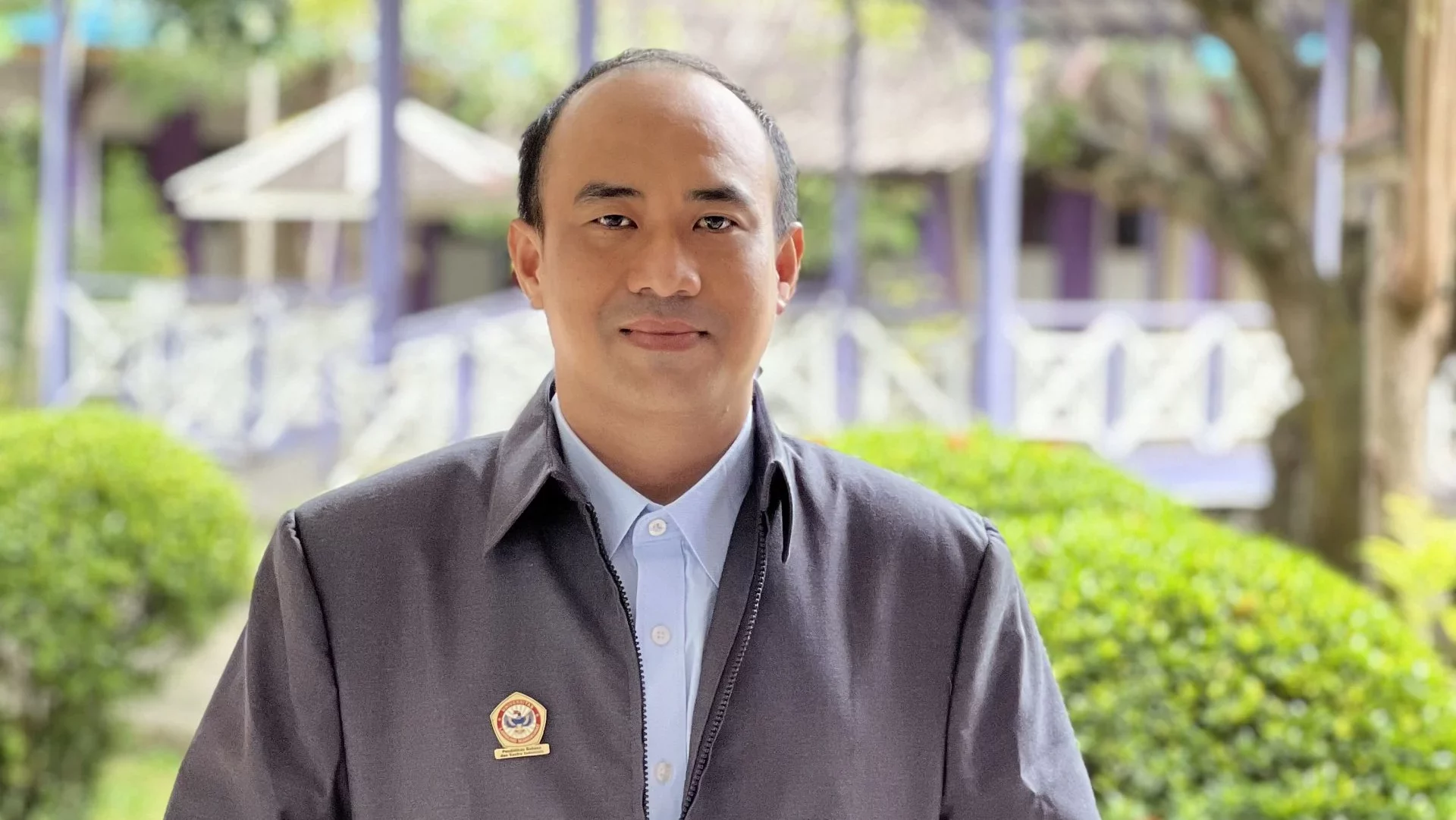
Syaifullah – Lecturer at FKIP, Lambung Mangkurat University
Published in the Opinion Column of Radar Banjarmasin, May 20, 2025 edition