Types and Forms of Sexual Violence
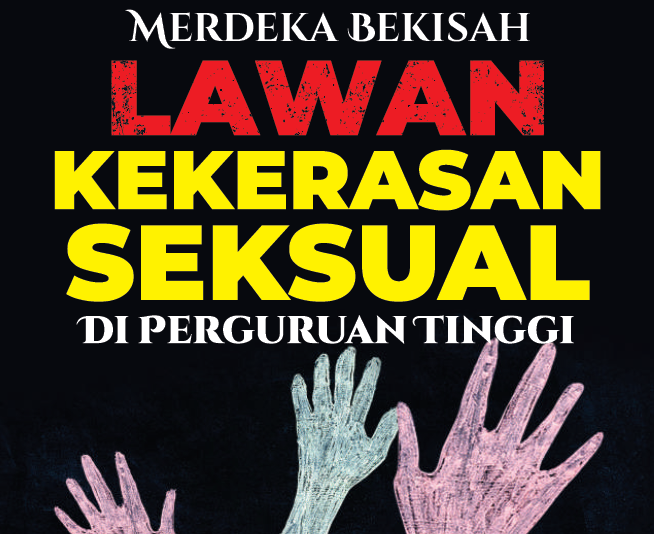
Sexual violence can occur verbally, non-physically, physically, and through information and communication technology. Based on the ULM PPKS Task Force pocket book, the forms of sexual violence that can occur include:
- Making remarks that discriminate or harass the victim’s physical appearance, body condition, and/or gender identity;
- Intentionally showing one’s genitals without the victim’s consent;
- Making remarks that contain seduction, jokes, and/or whistles that are sexually suggestive to the victim;
- Staring at the victim with sexual and/or uncomfortable overtones;
- Sending messages, jokes, pictures, photos, audio, and/or videos with sexual overtones to the victim even though the victim has forbidden it;
- Taking, recording, and/or distributing photos and/or audio and/or visual recordings of the victim that are sexually suggestive without the victim’s consent;
- Uploading photos of the victim’s body and/or personal information that are sexually suggestive without the victim’s consent;
- Distributing information related to the victim’s body and/or personal information that is sexually explicit without the victim’s consent;
- Peeking or intentionally watching the victim doing activities privately and/or in a private space;
- Persuading, promising, offering something, or threatening the victim to carry out transactions or sexual activities that the victim does not agree to;
- Giving punishments or sanctions that are sexually explicit;
- Touching, rubbing, groping, holding, hugging, kissing, and/or rubbing parts of the victim’s body against the victim’s body without the victim’s consent;
- Undressing the victim without the victim’s consent;
- Forcing the victim to carry out transactions or sexual activities;
- Practicing the culture of the student, educator, and education personnel community that is sexually explicit;
- Attempting rape but penetration does not occur;
- Committing rape including penetration with objects or body parts other than the genitals;
- Forcing or tricking the victim into having an abortion;
- Forcing or deceiving the victim to become pregnant;
- Allowing sexual violence to occur intentionally; and/or
- Committing other acts of sexual violence.
The victim’s consent referred to in number 2, number 6, number 7, number 8, number 12, and number 13, is considered invalid if the victim:
- Is not yet an adult according to the provisions of the laws and regulations;
- Experiences a situation where the perpetrator threatens, forces, and/or abuses his/her position;
- Experiences a condition under the influence of drugs, alcohol, and/or narcotics;
- Experiences illness, unconsciousness, or sleep;
- Has a vulnerable physical and/or psychological condition;
- Experiences temporary paralysis (tonic immobility); and/or
- Experiences a state of shock.
Universitas Lambung Mangkurat (ULM) as a state university also supports the establishment of a campus free from sexual violence based on Permendikbudristek Number 30 of 2021 concerning the Prevention and Handling of Sexual Violence in the Higher Education Environment.
Since 2022, ULM has formed a Task Force for the Prevention and Handling of Sexual Violence or better known as the ULM PPKS Task Force. This is a form of ULM’s commitment to preventing and handling all forms of sexual violence.
The ULM PPKS Task Force accepts complaints of sexual violence via the website https://satgas-ppks.ulm.ac.id. Reports can be submitted anonymously by filling out the complaint form on the website.
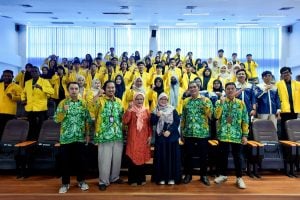
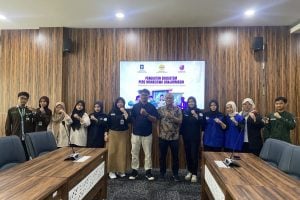
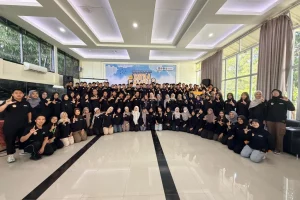
In addition to providing complaint services, the ULM PPKS Task Force also actively socializes to faculties within the ULM environment with a target audience of the entire academic community. At the end of 2024, the ULM PPKS Task Force team published a pocket book entitled “Merdeka Bekisah: Fight Sexual Violence in Higher Education” which contains a guide to recognizing sexual violence and preventing and handling cases of sexual violence.