ULM Students Discover Simple Innovation to Reduce Depression in Autoimmune Patients
Banjarbaru – Lambung Mangkurat University (ULM) has once again demonstrated its leadership in research that has a direct impact on society. A team of students from the Psychology Study Program, Faculty of Medicine, ULM, has successfully discovered a simple and effective method to reduce depression levels and improve mood in autoimmune patients through a mindful walking meditation approach.
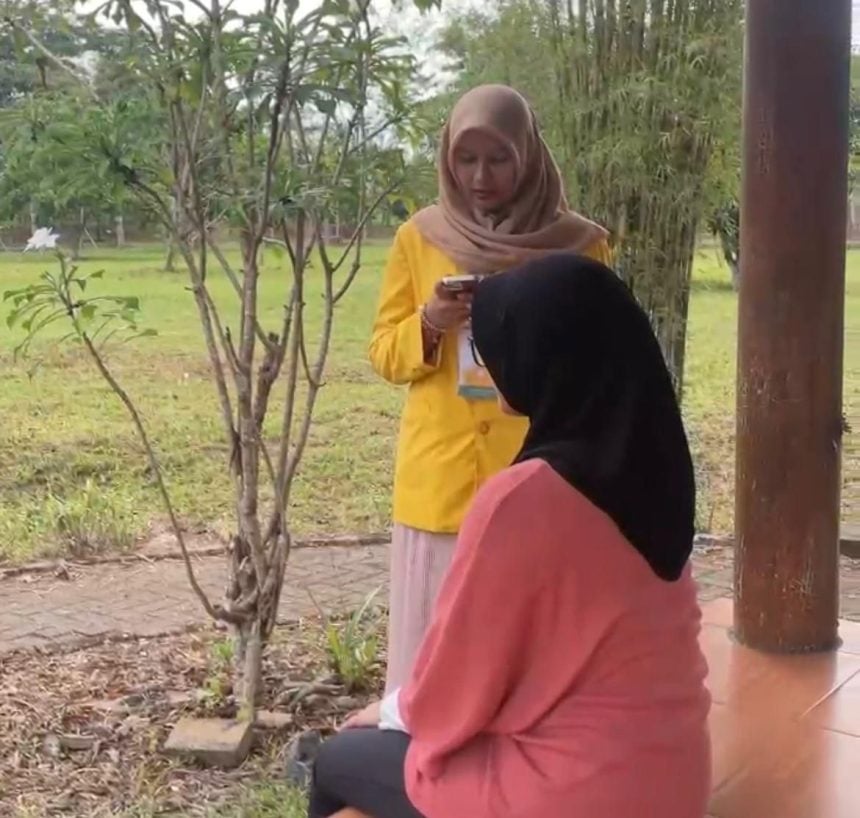
This research was conducted at the Banua Botanical Gardens on Sunday (October 19, 2025). Participants with autoimmune disorders participated in two different interventions: walking directly in nature and watching virtual videos of natural scenery.
The head of the research team, Ibaldy Ryandu Fadhillah, explained that the idea for this research arose from concern for the psychological well-being of autoimmune patients, who are prone to chronic stress, depression, and anxiety.
“Unmanaged stress can worsen physical conditions and trigger relapses. Therefore, we wanted to find a simple way to help them maintain mental balance,” said Ibaldy.
Inspired by the Japanese concept of Shinrin-yoku, or forest bathing, the ULM team added mindfulness to the practice of walking in nature to maximize its psychological effects. The results showed that both walking in nature and watching virtual nature videos significantly reduced depression and improved mood.
Similar positive effects were also observed in participants who only watched short nature videos. This opens up opportunities for developing mental health interventions that are easy, affordable, and accessible to a wider audience, including those with physical disabilities.
The study, “Mindful Walking Meditation: A Comparison of the Effects of Real and Virtual Walking in a Botanical Garden on Mood and Stress Recovery in Autoimmune Patients,” demonstrates ULM’s commitment to integrating science and social care through community-based research.
With these findings, ULM affirms its role as a leading university focused not only on scientific development but also on the human welfare and mental health of the Banua community and Indonesia at large.