Tapin Clean Irrigation Movement 2025: Synergy for National Food Security
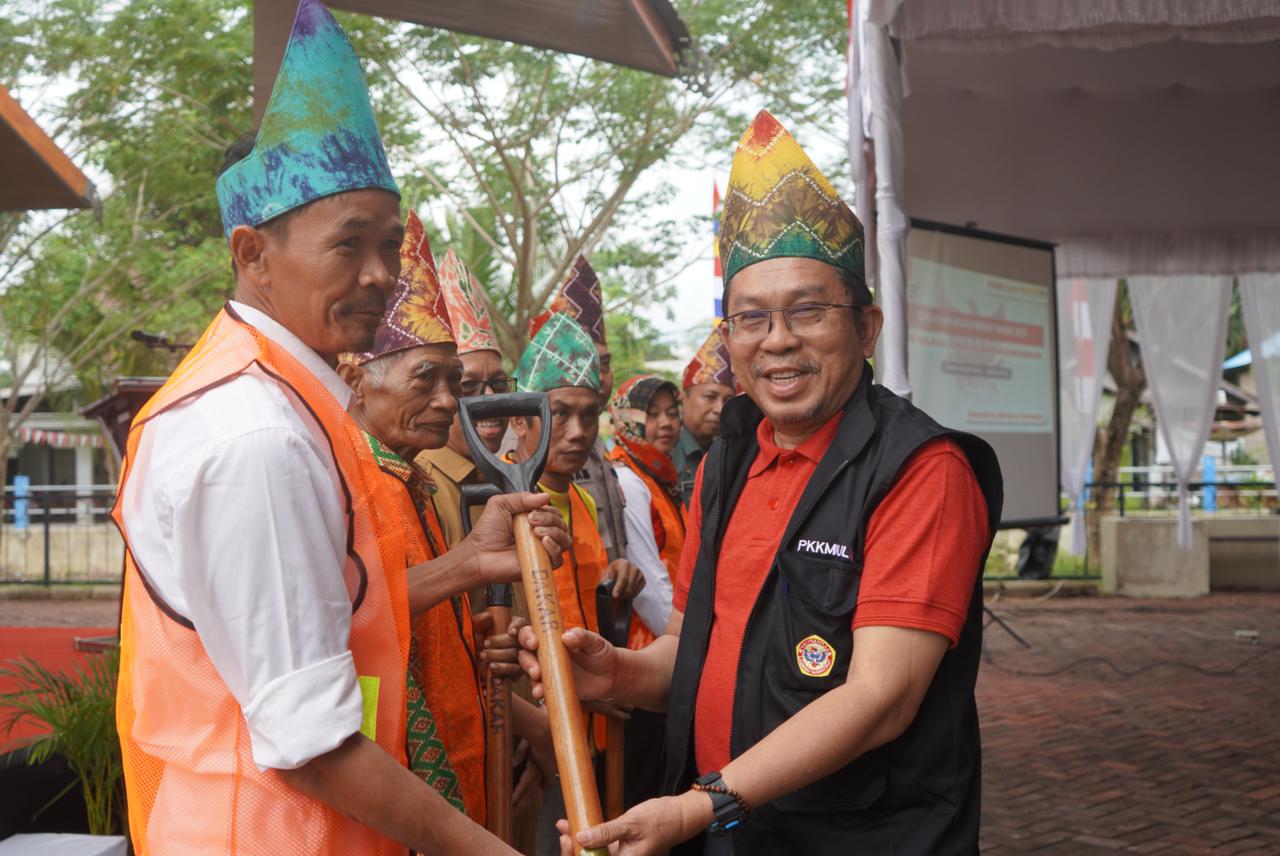
Rantau, Tapin – In commemoration of the 80th anniversary of the Republic of Indonesia’s Independence Day, Dr. Ir. Yusuf Azis, M.Sc., Vice Rector IV for Cooperation, Public Relations, and Information Systems, participated in the Clean Irrigation Movement for Fiscal Year 2025 held by the Kalimantan III Banjarmasin River Basin Center on Tuesday (August 12, 2025) at the Tapin Irrigation Park.
The Vice Rector and other participants worked together to clean the irrigation channels of trash and sediment. This movement is part of an effort to maintain the smooth distribution of water for agricultural needs and raise public awareness of the importance of irrigation infrastructure maintenance. This was done due to the accumulation of mud and trash in the Tapin irrigation channels.
All participants, including central and regional officials, academics, the Indonesian National Armed Forces (TNI) and the Indonesian National Police (Polri), farmers, and local residents, appeared enthusiastic and worked together to clear the piles of mud and trash that were blocking the irrigation flow.
Syafrudin, Expert Staff for Economic Development of Tapin Regency, representing the Tapin Regional Secretary, stated that this activity was not just a cleanup, but part of a broader strategy to maintain food security. “Water is the lifeblood of development. Without proper management, agriculture, industry, and socio-economic life will be disrupted,” he said.
Echoing Syafrudin’s sentiments, Dr. Ir. Yusuf Azis, M.Sc., also strongly supported this activity, which is a form of ULM’s support for the President of the Republic of Indonesia’s aspirations for food security and food self-sufficiency.
“Irrigation is essential for achieving this food security program,” he said.
He also greatly appreciated the dialogue activities related to the role of irrigation and the importance of the cleanup movement. The activities carried out after the cleanup were deemed equally important in raising public awareness of irrigation cleanliness. “Socialization is essential to raise public awareness about the need to work together to maintain the cleanliness of irrigation channels,” he added.