ULM Strengthens Community Empowerment Through the BUNGAS Women’s School, Partnering with Hasnur Center
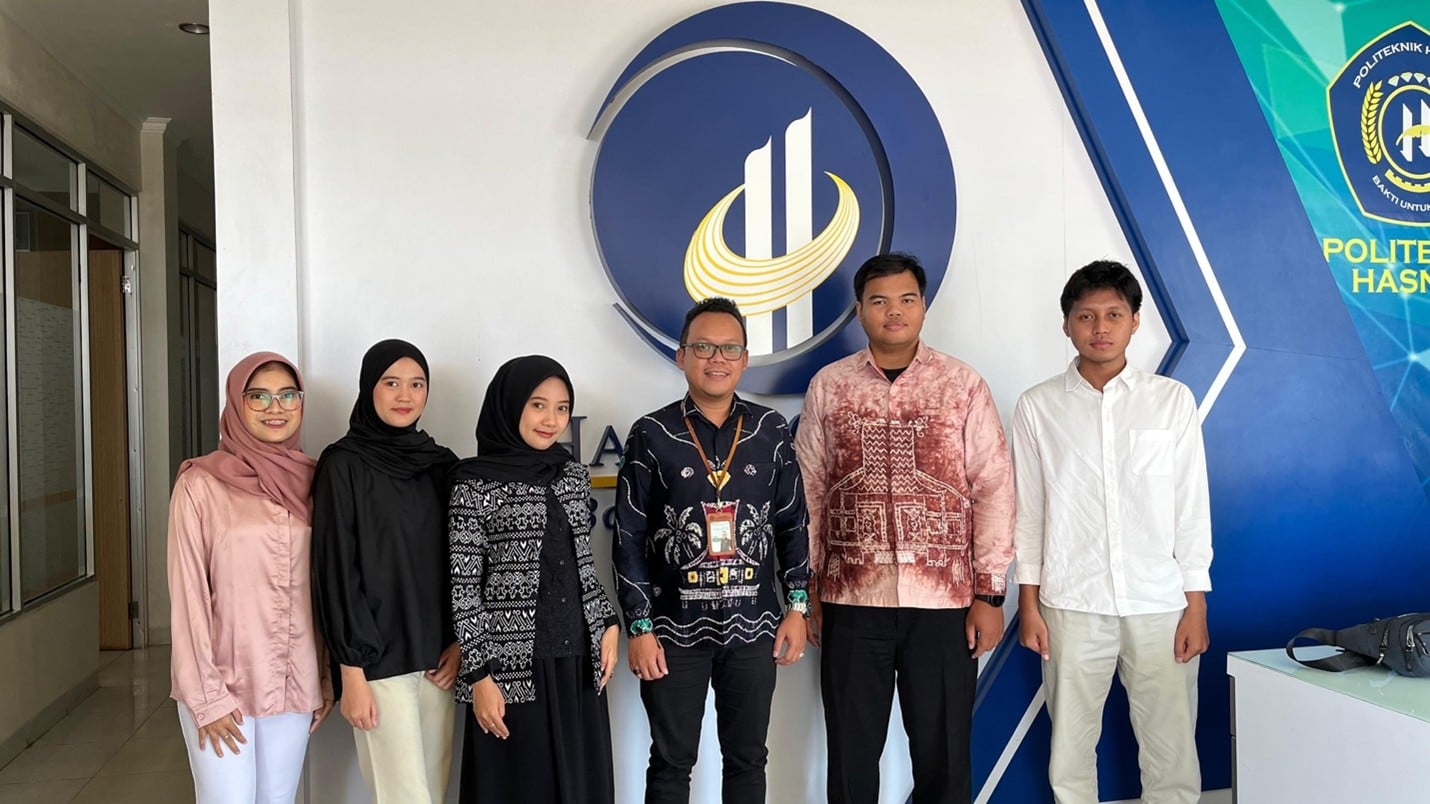
Barito Kuala – Lambung Mangkurat University (ULM) continues to expand its role in empowering rural communities through cross-sector collaboration. This time, the Student Organization Capacity Strengthening Program Team (PPK Ormawa) from the Student Representative Council of the Faculty of Medicine and Health Sciences (DPM FKIK) ULM initiated the BUNGAS Women’s School program as a concrete manifestation of its contribution to environmental and educational issues in the community.
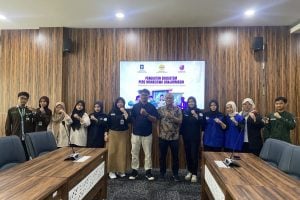
To strengthen the program’s implementation, the PPK Ormawa Team from DPM FKIK ULM held a meeting with the Hasnur Center and the Bakti Banua Youth Unit on Wednesday (July 30, 2025) at Hasnur Polytechnic, Handil Bakti, Barito Kuala. The meeting discussed synergy and long-term support from partners, particularly in the implementation of the two main classes within the BUNGAS Women’s School: the Environment Class and the Education Class.
The Ormawa mentoring lecturer from FKIK ULM, Ns. Agianto, S.Kep., M.N.S., Ph.D., accompanied three student representatives implementing the program: M. Gilang Syahrial Putra, Ghina Ghaida Mutmainah, and Dwinta Oktarisya. Present from the Hasnur Center were Muhammad Fajar Firdaus, S.Pd., M.Pd., and Putri Amalina Handayani, S.Sos., who expressed their full support for the planned collaboration.
“We are ready to support the implementation of this program, both by providing resource persons, educational materials, and involvement in mentoring village communities,” said Muhammad Fajar Firdaus. He emphasized that the private sector also has a social responsibility to contribute to community development.
The Environmental Class itself is designed to equip residents with skills in waste management, fertilizer production, and river water purification techniques. Meanwhile, the Education Class will focus on improving village children’s literacy, strengthening awareness of the importance of education, and optimizing the function of the village library as a community learning center.
According to M. Gilang Syahrial, one of the student proponents, the program will be implemented in a participatory manner, adapting to local needs.
“We want to be part of the solution, not just providing materials, but also building community involvement for sustainable change,” he said.
The meeting resulted in an agreement to develop a collaborative follow-up work plan. With support from the Hasnur Center as a private partner, ULM hopes the BUNGAS Women’s School program will have a broad impact, strengthening community capacity in the environmental and educational sectors, and becoming a model for sustainable community empowerment in South Kalimantan.