ULM Builds a Digital Ecosystem for South Kalimantan’s Young MSMEs through Innovative Training and Mentoring
Banjarmasin – Lambung Mangkurat University (ULM) continues to strengthen its commitment to promoting local economic empowerment through technological approaches and cross-sector collaboration. Through its Community Service (PKM) program, ULM held an activity titled “Empowering Creative Youth in South Kalimantan through Optimizing Digital Technology to Increase Business Competitiveness.”
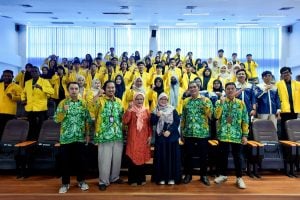
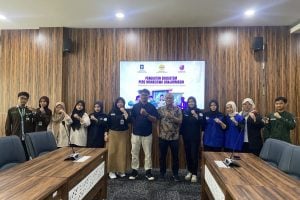
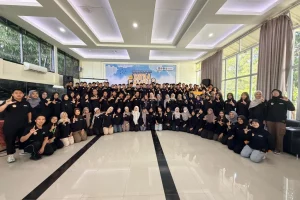
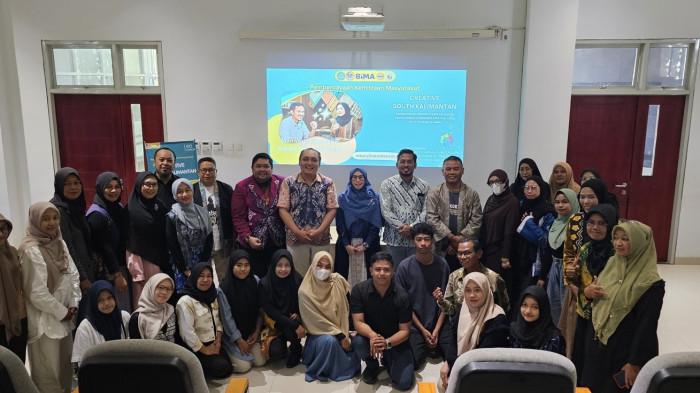
This activity, in collaboration with the South Kalimantan Creative Forum (KKF), was attended by 60 young entrepreneurs who actively participated in training and mentoring across several stages, held at the ULM Faculty of Economics and Business (FEB) Mini Theater in Banjarmasin.
The PKM Team Leader, Hendro Yulius Suryo Putro, M.Psi., emphasized that this program’s approach focuses not only on technical training but also on building a comprehensive and sustainable digital MSME ecosystem.
“We don’t want this activity to stop at just training. Our goal is to build an ecosystem that supports business actors to continue growing, based on technology and collaborative networks,” explained Hendro.
This program is designed in several strategic stages. Beginning with preparation and coordination between the proposing team and partners, the activity continues with participatory socialization so that participants feel part of the transformation process. Participants then participate in Focus Group Discussions (FGDs) and field observations to map their actual needs.
The results of this mapping serve as the basis for developing training materials relevant to business challenges in the field, particularly in business management, digital marketing, and product branding. The training materials are delivered over 32 interactive learning hours (JP), covering topics ranging from business planning, financial management, SWOT analysis, to digital marketing strategies using social media and marketplaces like Shopee and Tokopedia.
One participant, Aisyah, a sasirangan craftswoman and member of a women’s entrepreneur community from Banjarmasin, expressed her enthusiasm.
“Usually, I only rely on word of mouth. Now I’m more confident marketing my products through social media, have a marketplace account, and can create my own promotional content,” she said enthusiastically.
The training doesn’t stop there; participants also receive intensive mentoring from ULM’s team of facilitators and digital experts. They were assisted in creating online store accounts through the KalselKreatif.id platform, developing product displays, and developing promotional strategies tailored to the characteristics of their respective businesses. The mentoring was conducted in stages, as participants became more prepared to adopt technology.
During the discussion session, Akhsanul Rahmatullah, S.E., M.E., a resource person, highlighted the importance of establishing an organized sasirangan artisan association as a strategic step in addressing fluctuating raw material prices and the lack of standard selling prices.
“Through the association, business owners can unite to set quality standards, control raw material prices, and strengthen their bargaining position in the market,” he explained.
The activity concluded with an evaluation based on pre- and post-test instruments and in-depth interviews. The evaluation results demonstrated significant improvements in the participants’ managerial and digital skills. These findings served as the basis for developing sustainability plans, such as establishing a digital MSME community and developing a business incubation system.
The Head of the KKF, Farid Faturahman, appreciated ULM’s contribution in encouraging young entrepreneurs to advance digitally.
“We witnessed firsthand the changes in the participants in a short time. This type of activity deserves to be replicated in other regions,” he said.
The ULM Community Service Program (PKM) also produced various concrete outcomes, such as the creation of digital business accounts for participants, thematic training modules, video documentation, and one scientific article published in a national journal. This program also contributed to the achievement of SDGs points 8 and 9, as well as the university’s key performance indicators (IKU).
By combining innovation, technology, and participatory empowerment, Lambung Mangkurat University has succeeded in creating a community service model that is adaptive, contextual, and has a real impact on the growth of creative MSMEs in South Kalimantan.