• Penghargaan
  • Akreditasi ULM
  • Blog Dosen ULM
  • INFO PMB ULM
    • SNMPTN 2020
    • UTBK-SBMPTN 2020
    • Seleksi Mandiri 2020
    • Beasiswa KIP-Kuliah
  • Brosur/Leaflet ULM
  • Indonesia
ULMULM
  • Home
  • Profile
    • Vision, Mission, Goals, Targets & Achievement Strategies
    • Organizational structure
    • Management
      • Executive Board
      • Senate Board
      • Leaders of Faculties, Institutions and UPT
    • History
    • Meaning of the ULM Coat of Arms
    • Motto, Flag, Hymn & Mars
    • Duties, Functions and Complete Addresses of Faculties, Postgraduates, Institutions and UPT
  • Bureau
    • Academic and Student Affairs
    • General and Finance
    • Planning, Collaboration and Public Relations
  • Faculty
    • Teacher Training & Education
    • Economy & Business
    • Law
    • Social science and political science
    • Mathematics and natural science
    • Fishery & Marine
    • Forestry
    • Agriculture
    • Engineering
    • Medical
    • Dentistry
    • Postgraduate
  • SAKIP
    • Performance Planning
      • Strategic Plan
      • Development Master Plan
      • Annual Performance Plan
      • Performance Agreement Document
      • Action plan
    • Performance Measurement
      • Annual Performance Achievements
    • Performance Reporting
      • Accountability Report
    • Performance evaluation
      • SAKIP evaluation
  • Satisfaction Survey
    • Unduh Survei

Berita Lainnya

  • Home
  • Blog
  • Berita Lainnya
  • Beware of Fraud in the Digital Era

Beware of Fraud in the Digital Era
  • Posted by Humas ULM
  • Categories Berita Lainnya
  • Date 1 December 2024

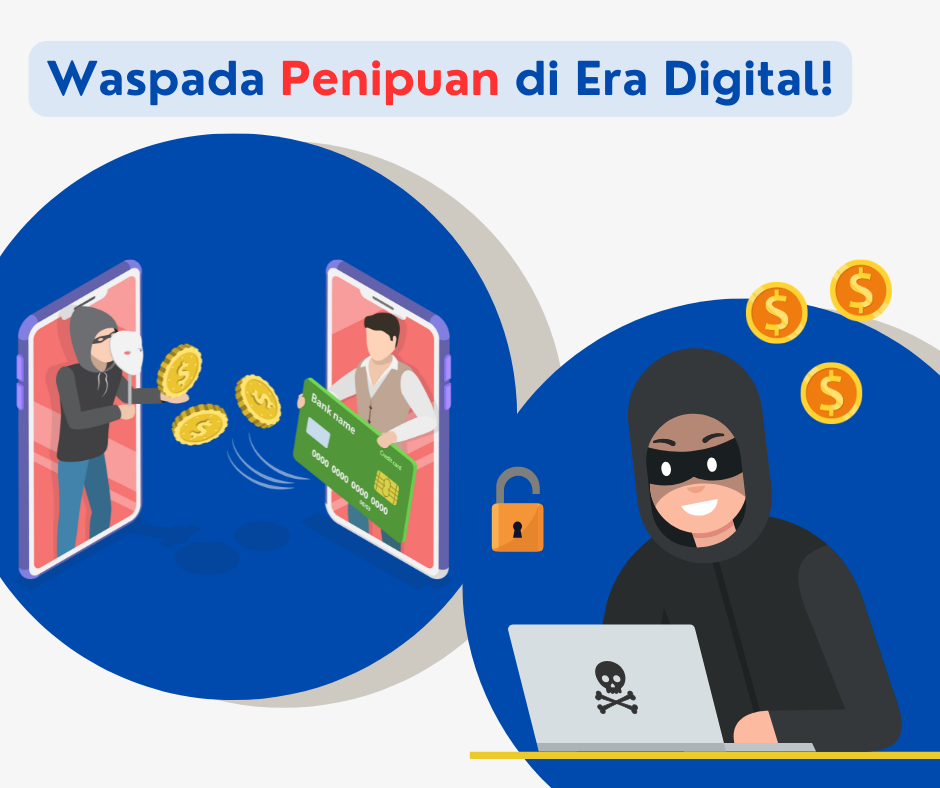
Technological advances provide convenience in various elements and sectors of society. However, in this convenience, people must also be aware of the gaps in digital fraud threats. Starting from phishing to identity theft, digital fraud exploits security gaps and the lack of public awareness about digital transaction security.

Understanding how digital fraud works and how to prevent it is important to keep us safe in cyberspace. There are 2 (two) types of digital fraud that often occur, namely phishing and share card info.

Phishing is a fraudulent technique to steal someone’s personal information, such as passwords, credit card numbers, or other sensitive data. The method generally used is that fraudsters will disguise themselves as trusted parties, such as well-known e-commerce, banks, or other digital services. Usually phishing is done via email, text messages, or fake websites that are made to look like official services or organizations.

Phishing mode usually provides messages that urge victims to immediately take certain actions, such as updating accounts or passwords, verifying information, or avoiding other threats. Usually these messages contain instructions for victims to click on certain links.

Share Card Info is a term that refers to a fraud mode where the fraudster impersonates a bank or other party and asks the victim to share payment card information. The information in question usually includes:

  • Card number (16 digits on the front of the card)
  • Expiration date
  • CVV/CVC code (3 or 4 digits on the back of the card)
  • Cardholder name
  • OTP code (on Mobile Banking or e-wallet services)

This act of sharing information is often used by fraudsters in various crime modes, such as asking victims to send card details for fake transactions, fake promotions, or other reasons that seem convincing.

The danger of sharing card information is the risk of misuse for transactions without the cardholder’s knowledge. Therefore, it is very important to maintain the confidentiality of payment card data and only use it on trusted platforms or stores. If someone asks for card details, always be aware of the potential for fraud.

How to Avoid Fraud in the Digital Era

Be careful when accessing suspicious links or URLs sent by account addresses that you do not recognize;

Use additional security measures such as two-factor authentication;

Use a strong and difficult to guess password;

Stay alert and do not share payment information, either credit/debit cards or OTP verification codes that you have with anyone.

If you become a victim of digital transaction fraud, there are Steps You Can Take If You Become a Victim of Digital Transaction Fraud.

  • Share:
Humas ULM

Previous post

Smart Ways to Make Online Transactions to Avoid Fraud
1 December 2024

Next post

LPMPP Holds Workshop on Team Based Project and Case Method in Semester Learning Plan (RPS)
3 December 2024

You may also like

WhatsApp Image 2026-04-11 at 10.16.08 AM (1)
ULM Supports Scholarship Recipients, Building a Positive Mindset and Academic Discipline
11 April, 2026
IMG_7921-1024×768
Reviving the Student Press: ULM Promotes Critical, Independent, and Ethical Journalism
11 April, 2026
e014243d-3f6d-4213-9903-063ee218e352-1024×768
ULM Strengthens Student Character and Collaboration through 2026 Student Organization Development Activities
3 April, 2026

Pengumuman Terbaru

ULM Office Inventory Auction Due to Fire
08Jan2026
Open Recruitment – Public Relations Volunteers
02Jan2026
Postponement of Administrative Selection and Interview Results
23Dec2025
Recruitment of Academic and Educational Personnel
11Dec2025

Lembaga & UPT

  • Career Development and Entrepreneurship Support Unit
  • Guidance and Counseling Support Unit
  • Information and Communication Technology Support Unit
  • Institute for Quality Assurance and Learning Enhancement
  • Institute for Research and Community Service
  • Integrated Laboratory Support Unit
  • Language Support Unit
  • Lembaga Penjamin Mutu
  • Library Support Unit
  • Wetland Environment Support Unit

Tautan

  • Career Development Center
  • Kawasan Hutan Dengan Tujuan Khusus
  • LPSE
  • Pusat Pelayanan Asesmen Kompetensi
  • Pusat Penelitian Lingkungan Hidup
  • Pusat Pengelolaan Jurnal & Penerbitan
  • Pusat Pengembangan Infrastruktur Informasi Geospasial
  • Pusinotekom Hutan dan Lahan Basah
  • Technology Business Incubator (IBT)
  • Tim Pakar Percepatan Penanganan Covid-19 ULM
  • Unit Konsultasi dan Pelayanan Psikologi

Kontak Kami

Jl. Brigjen H. Hasan Basri, Kayu Tangi, Banjarmasin, Indonesia, Kotak Pos 219

Pusat Informasi dan Pelayanan Terpadu:

(0511) 3306671, 3306603, 3304177, 3306694

[email protected]

Copyright ©2019 Universitas Lambung Mangkurat

  • IKA
  • Peta Kampus