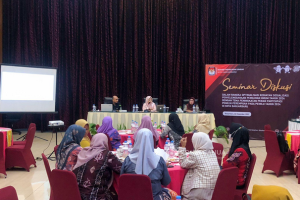
Workshop on Getting to Know the Benefits and Risks of Loans in the Conception of Islamic Finance
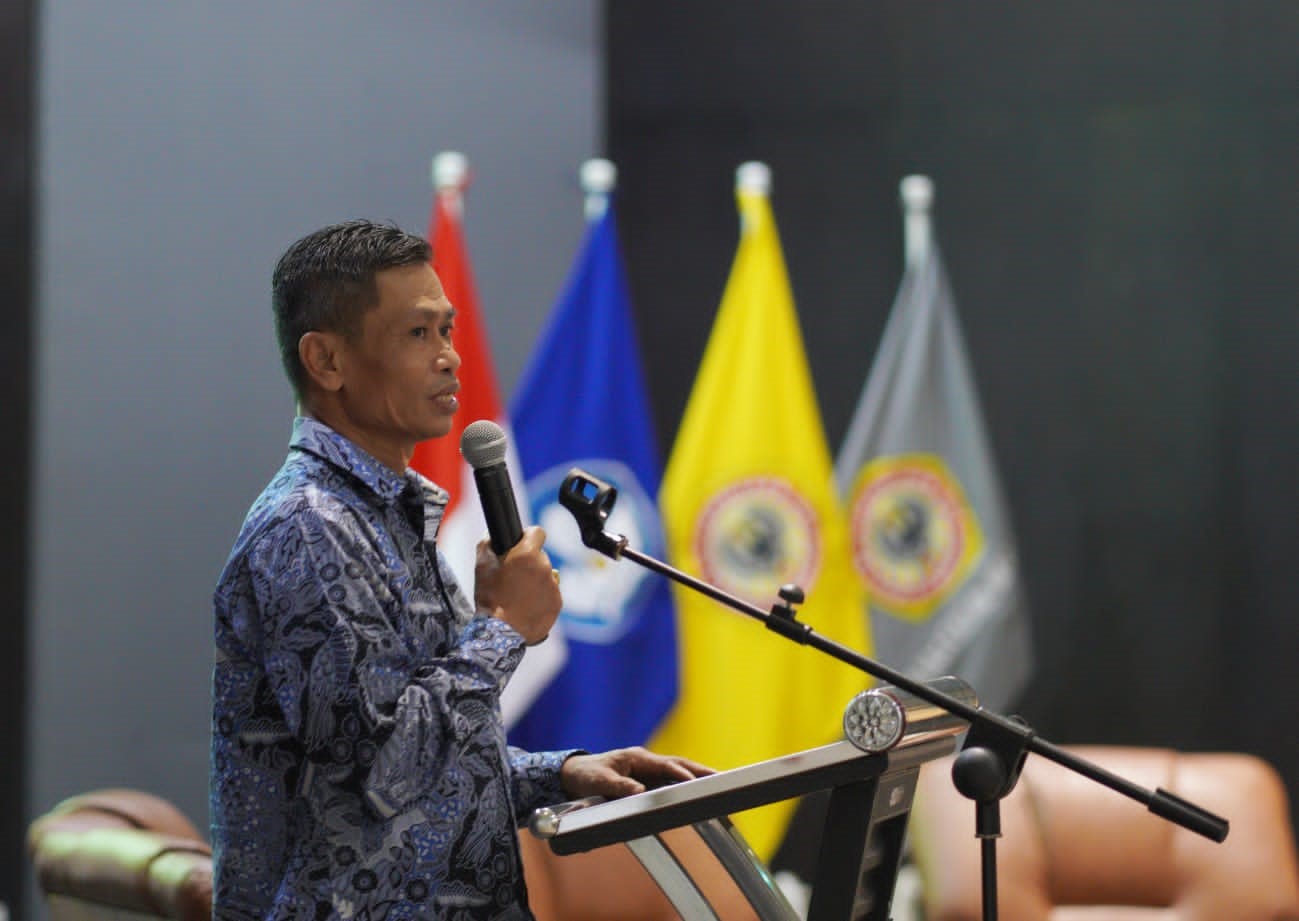
Banjarmasin, Rector of the University of Lambung Mangkurat (ULM) Prof. Dr. Ahmad Alim Bachri, S.E., M.Si attended the Sharia Finance Education workshop which took place at the ULM Faculty of Economics and Business (FEB) Lecture Theater on Friday (14/04/2023). The event was attended by the Head of the Kalimantan Regional OJK, the Sharia Economic Community Advisory Board, the Chairperson of the South Kalimantan Provincial Sharia Economic Community, the Chairman of the Sharia Economic Experts Council, the South Kalimantan Sharia Economic Management, and also Poliban and FEB ULM Lecturers.
The rise of illegal online loans in society is certainly a polemic that deserves close attention. Behind the convenience and practicality offered, there are not a few people who take advantage of this online loan unwisely. Even though when compared to conventional loans, online loans have interest rates that tend to be high and short installment tenors. Especially since the Covid-19 pandemic has spread and made the people’s economy very vulnerable to the temptation of online loans.
The Rector appreciates the management of the South Kalimantan Sharia Economic Community who are willing to carry out activities related to how to socialize the Islamic economy in this country. With this activity it is hoped that it can provide education related to Islamic finance so that students and the wider community are more familiar with the benefits and risks of online loans in the concept of Islamic finance so that they can be wiser in debt
When viewed from an economic perspective, the potential of the Indonesian nation in the field of Islamic economics is quite large. Even though this potential has not been optimally utilized in boosting the nation’s economy. When viewed from the composition of Islamic Banking asset ownership compared to other Conventional Banking it is still very far away. Therefore, this is one of the homework for sharia economic practitioners to be able to increase community participation in the future.

You may also like
ULM will have 118 professors by the end of 2023