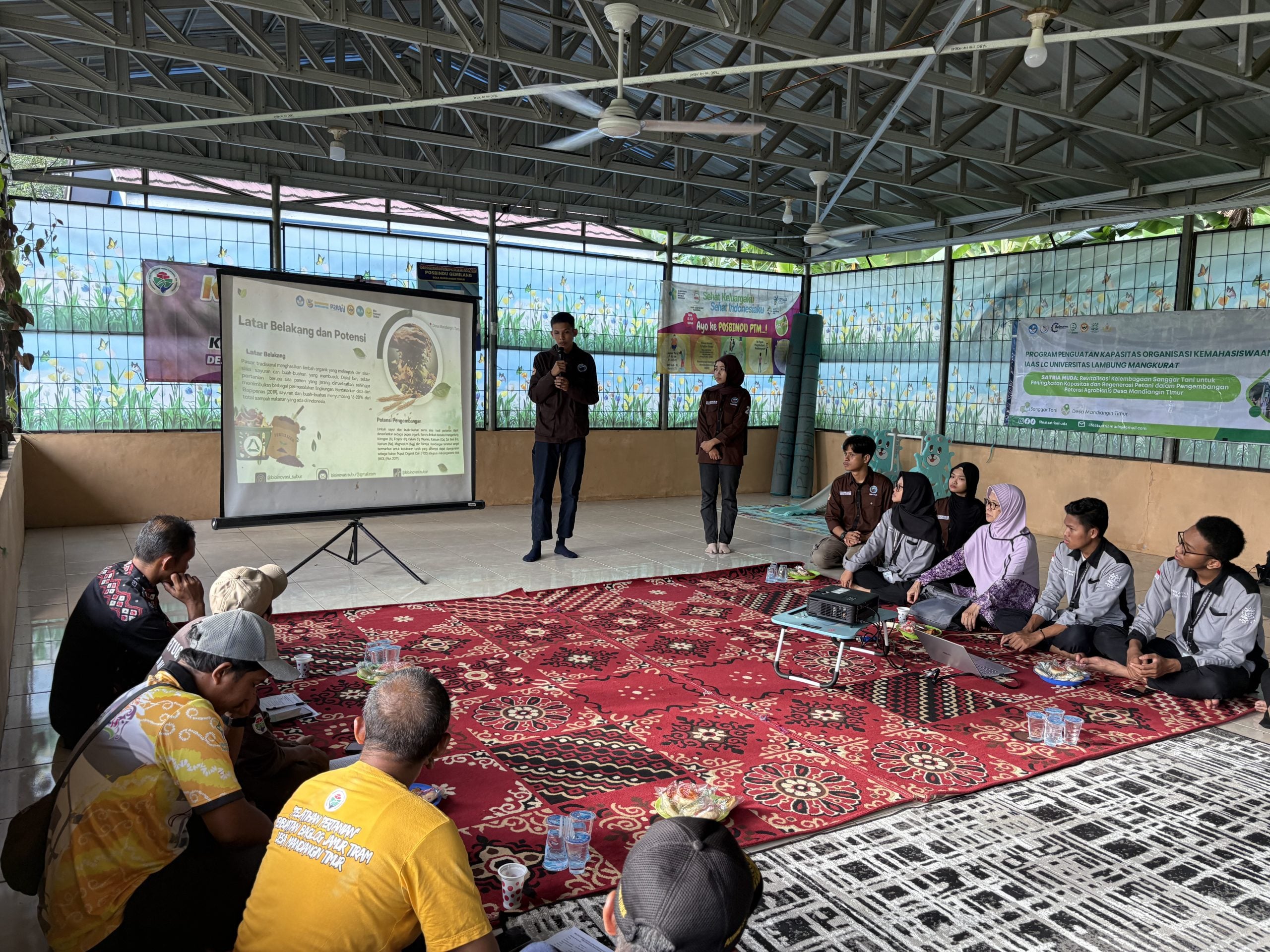
Banjar, September 7, 2025 – Lambung Mangkurat University (ULM) continues to strengthen its commitment to supporting sustainable agriculture. Through a collaboration between the PPK Ormawa Team of IAAS LC ULM and the P2MW Team of the Soil Science Study Program, Faculty of Agriculture, ULM, students and lecturers held a training on processing agricultural waste into fermented organic fertilizer in Mandiangin Timur Village, Karang Intan District, Banjar Regency.
The activity, held on Sunday (September 7, 2025), received full support from village officials, including the village head, village secretary, neighborhood unit head, and the youth organization (Karang Taruna), who were also present to assist residents. Their presence emphasized the importance of synergy between the university and the community in utilizing local potential.
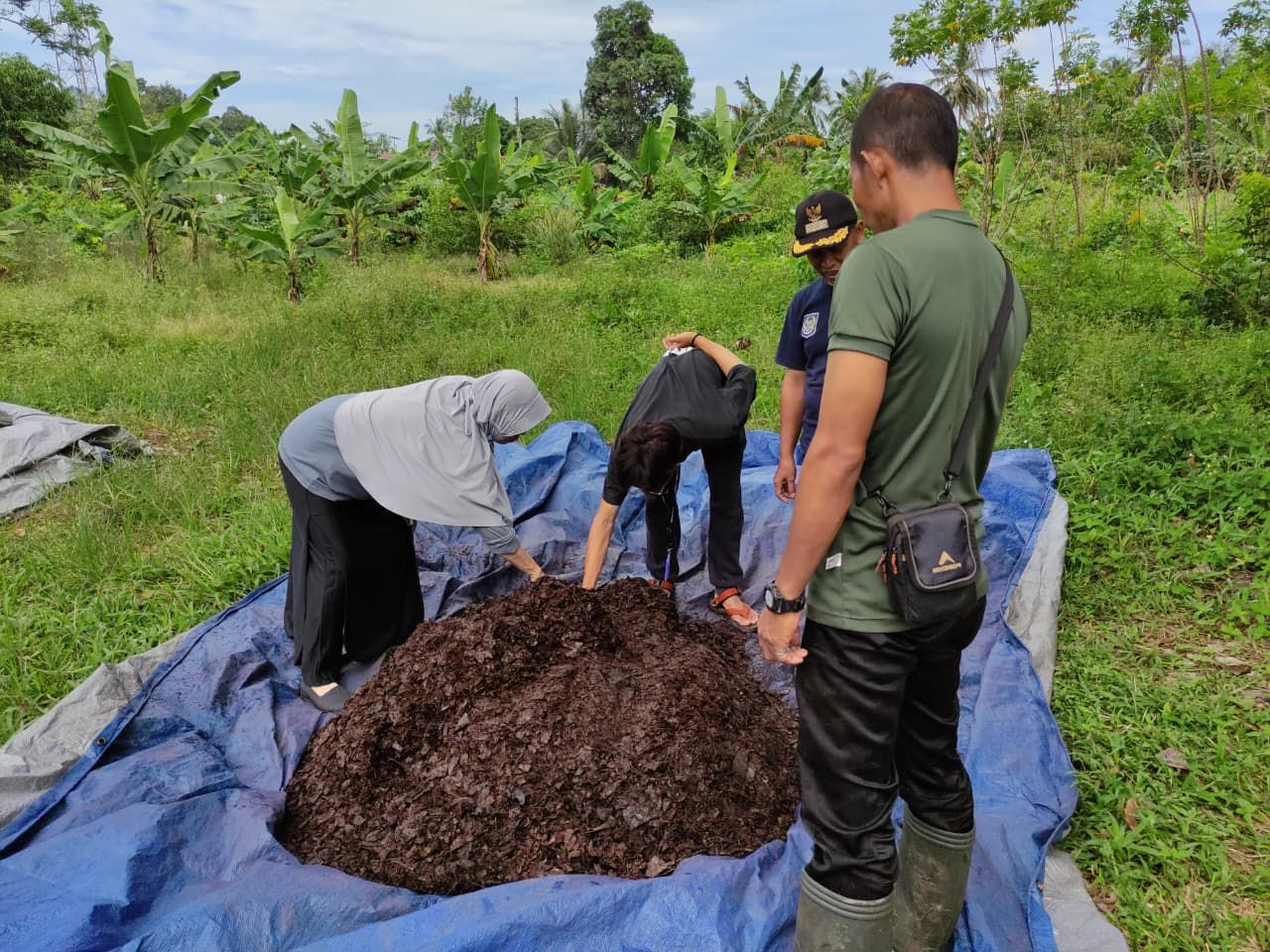
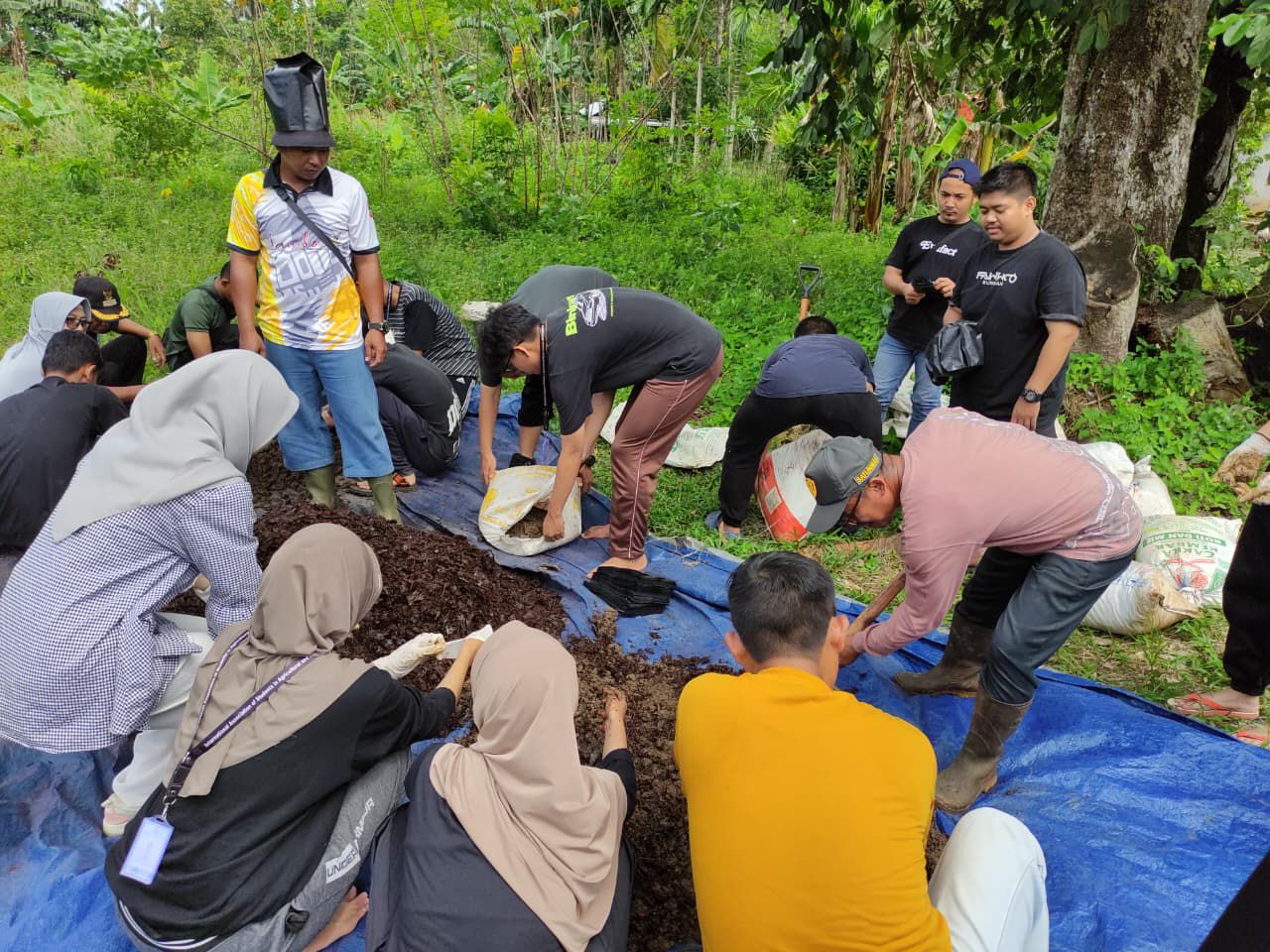
The training began with a presentation on the potential of organic waste as an environmentally friendly fertilizer alternative by the P2MW Soil Science Team. Participants were then invited to participate in hands-on practice, starting with shredding waste, preparing an activator solution (EM4, molasses, and Trichoderma), and fermenting it for approximately two weeks.
The atmosphere was interactive. Residents not only listened but also actively asked questions, took notes, and even tried the fertilizer-making steps themselves. This demonstrated high enthusiasm and a new awareness that agricultural and market waste are no longer just trash, but valuable resources.
Eny Dwi Pujawati, M.Si., the accompanying lecturer for the PPK Ormawa IAAS LC ULM Team, emphasized the importance of sustaining the skills acquired by the community.
“We hope this training can continue to be practiced by residents. This program aligns with ULM’s commitment to strengthening the capacity of village farmers while opening up environmentally friendly agribusiness opportunities,” she said.
In addition to providing practical skills, this activity also strengthened students’ role in the Tri Dharma Perguruan Tinggi (Three Pillars of Higher Education), particularly community service. The collaboration between the two ULM teams serves as an example of how universities can provide innovative solutions to address environmental challenges while improving community welfare.
With the support of village officials and the enthusiasm of residents, it is hoped that this training will not be a one-time activity but will develop into a sustainable initiative. Going forward, the organic fertilizer produced by residents is expected to increase agricultural productivity, preserve the environment, and open up new, competitive business opportunities.