Impactful Community Service Program: ULM Students Process Plastic Waste into Eco-Friendly Paving Blocks in Pejala Village
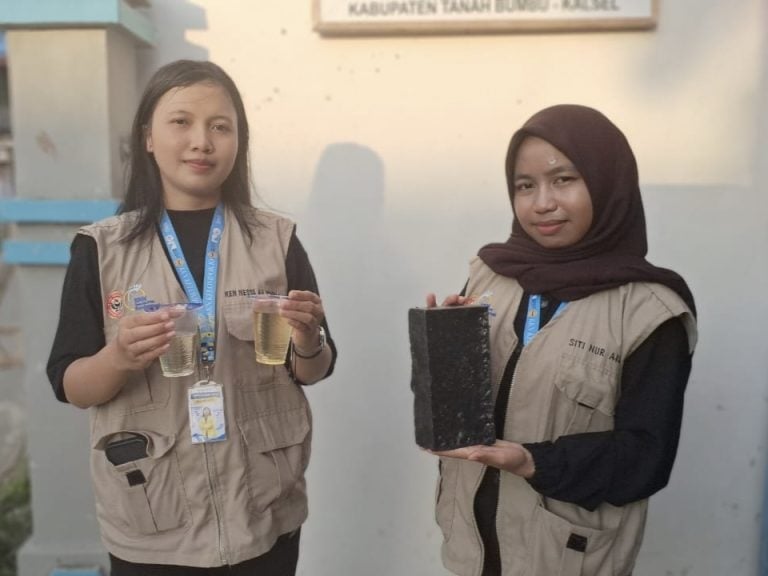
TANAH BUMBU – Lambung Mangkurat University (ULM), through its Thematic Community Service Program (KKN) students from the Faculty of Fisheries and Marine Sciences (FPIK), implemented a community service program involving education and practice in processing plastic waste into eco-friendly paving blocks in Pejala Village, Kusan Hilir District, Tanah Bumbu Regency, on Wednesday (August 6, 2025).
The activity was held at the Pejala Village Family Welfare Movement (PKK) Office, RT 04, and was attended by dozens of residents, including fishermen, housewives, community leaders, and village officials. The presence of fisheries extension workers from Tanah Bumbu Regency further strengthened the synergy between students, the village government, and the community in an effort to create sustainable solutions for waste management and meet village infrastructure needs.
This program is an implementation of the Tri Dharma Perguruan Tinggi (Three Pillars of Higher Education) in the area of community service, where ULM plays an active role in making real contributions through environmentally friendly innovations. Students introduced a technique for processing difficult-to-decompose household plastic waste into strong, durable, and economically valuable paving blocks.
“This isn’t just a community service project, but an invitation to change the way we view plastic waste. With a little creativity, waste can be turned into useful products that help reduce pollution and increase income,” said Siti Nur Aisyah, a member of the ULM FPIK Community Service Team.
In addition to processing plastic waste, students also demonstrated the creation of a simple biofilter to address the problem of brackish water caused by seawater intrusion. This biofilter is expected to help residents obtain clean water for their daily needs.
Eko Prio Raharjo Shandy, the Coordinator of the Tanah Bumbu Regency Fisheries Extension Service, expressed his appreciation for the ULM students’ initiative.
“This activity is very beneficial and should continue. Hopefully, residents can apply this technology independently,” he said.
The community’s enthusiasm was evident in their participation in the paving and biofilter-making practices. Residents also actively discussed, asked questions, and planned the implementation of this technology in their neighborhood.
With this program, ULM hopes to encourage Pejala Village to become an example of a coastal village that has successfully utilized plastic waste to create valuable products while simultaneously addressing environmental issues. This small step is expected to have a significant impact on environmental sustainability and the well-being of the village community.