ULM Academics Highlight the Legacy and Challenges of Banjarmasin’s Leadership
Banjarmasin – The leadership of Mayor Ibnu Sina over two terms (2016-2021 and 2021-2024) has left various achievements as well as tasks that need to be addressed by the next leaders, H. M. Yamin and Hj. Ananda.
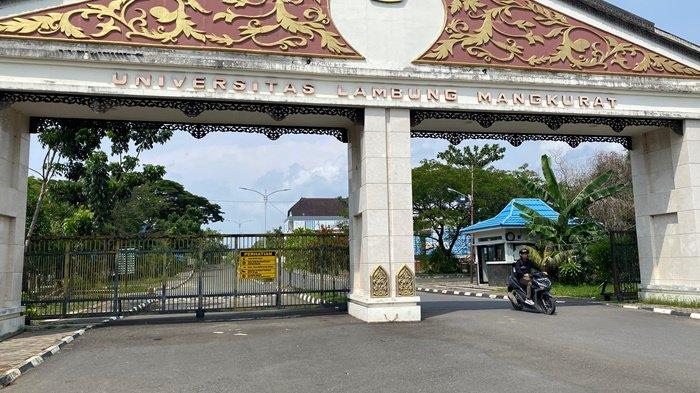
According to Siti Mauliana Hairini, S.IP., M.A., an academic from the Faculty of Social and Political Sciences at Universitas Lambung Mangkurat (ULM), de jure, Ibnu Sina’s leadership has ended, but de facto, there are still unresolved issues in urban governance.
“Two terms is certainly not a short time, but it is also not long enough to solve all the problems in Banjarmasin, which is almost 500 years old,” she said in a press statement received on Thursday (20/2/2025).
One of the successes recorded during Ibnu Sina’s leadership was the increase in the number of new entrepreneurs. During the first term of Banjarmasin BAIMAN, the target of 2,500 new entrepreneurs in five years was even exceeded in just one year. According to data from Satu Data Kalsel, the number of SMEs in Banjarmasin increased from 31,416 in 2016 to 40,594 in 2020. However, after that, the number of SMEs fluctuated, dropping to 37,214 in 2021 and stagnating in 2022.
“The inconsistency in SME growth shows that the program’s achievements focused more on large numbers during political years, without ensuring sustainable impact in making Banjarmasin a center of trade and services,” added Siti Mauliana.
Not only in the economic field, but Ibnu Sina and his deputy, Arifin Noor, also managed to bring Banjarmasin various awards, including the Innovative Government Award 2023, Top 10 Digital Government Award 2024, and Wahana Tata Nugraha (WTN) 2024 for well-organized transportation systems and public facilities. At the end of his term, Banjarmasin even received an A rating in public service compliance.
However, behind these achievements, there are major unresolved issues, one of which is waste management. On February 1, 2025, the Ministry of Environment (KLH) imposed administrative sanctions on the Basirih Final Disposal Site (TPA) for still using the open dumping method. Meanwhile, Banjarmasin produces more than 600 tons of waste per day, and the Temporary Disposal Site (TPS) system is considered ineffective.
“These sanctions are a disaster at the end of Ibnu Sina’s leadership and can even be seen as a symbol of the failure of the Banjarmasin Barasih wan Nyaman vision over two terms,” explained Siti Mauliana.
Another issue that Yamin and Ananda must address immediately is river normalization. Banjarmasin, as a river city, still faces serious problems in water flow management. Rivers that used to be the main transportation routes and flood controllers are now narrowing, silting due to sedimentation, and being covered by buildings.
This has increased the risk of flooding. In January 2021, a major flood hit Banjarmasin, revealing the city’s vulnerability to disasters. Even in December 2024, tidal floods occurred again in several areas with varying water levels.
“The ineffective drainage system design worsens the condition. If it rains along with high tides, waterlogging can last long on various roads,” she added.
Besides rivers and drainage, another challenge for Yamin-Ananda is wastewater management. The Regional Domestic Wastewater Treatment Company (PD PALD) is threatened with bankruptcy because its number of customers is still below 10 percent compared to PT PAM Bandarmasih customers. This condition makes it difficult for PD PALD to finance its operations.
The issue of stunting has also resurfaced. In mid-2024, the stunting rate in Banjarmasin increased from 22.4 percent to 26.5 percent, moving away from the national target of 14 percent. Previously, the stunting rate had decreased from 27 percent to 20 percent under Ibnu Sina’s leadership.
With these various inherited issues, Yamin and Ananda face significant challenges in realizing their vision of Progress and Prosperity.
“Banjarmasin needs leaders who are not only visionary but also consistent and have a strong political commitment to systematically and sustainably improve the city,” said Siti Mauliana.
According to her, if Yamin and Ananda can craft policies with the right approach, they can not only make Banjarmasin a progressive and prosperous city but also leave a sustainable legacy for future generations.