Book Review Forum at ULM, Exploring Myths and Facts about the Palm Oil Industry
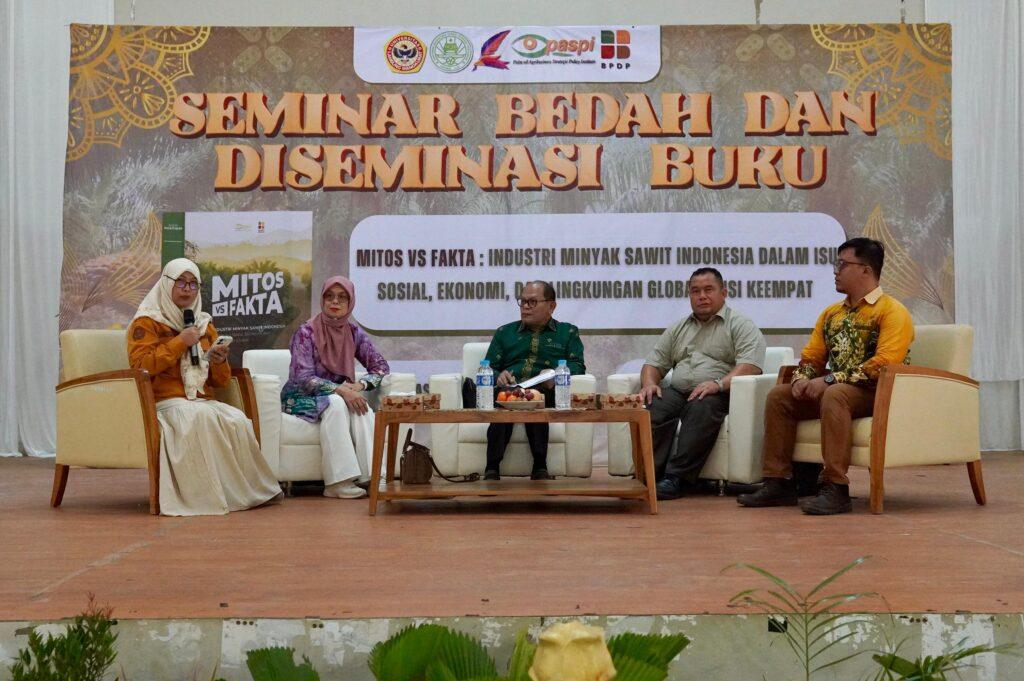
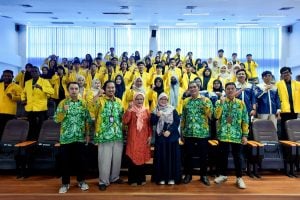
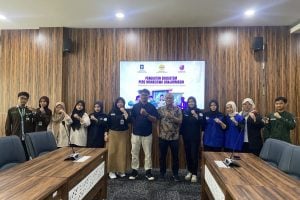
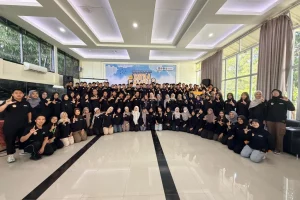
BANJARBARU – Lambung Mangkurat University (ULM) hosted a book review and dissemination event entitled “Myths vs. Facts: The Indonesian Palm Oil Industry in Global Social, Economic, and Environmental Issues, Fourth Edition,” held on Saturday (September 20, 2025) at the ULM Banjarbaru Multipurpose Building.
This event was a collaboration between the Palm Oil Agribusiness Strategic Policy Institute (PASPI) and the Plantation Fund Management Agency (BPDP), with the support of the Agricultural Socioeconomic Student Association (HIMASEP) and the Agribusiness Department, Faculty of Agriculture, ULM.
The event was attended not only by ULM students but also by students from various universities in South Kalimantan, such as STIE Pancasetia, Muhammad Arsyad Al-Banjary Islamic University of Kalimantan, Borneo Lestari University, and Antasari State Islamic University. Representatives of palm oil industry associations such as GAPKI and the South Kalimantan Regional Leadership Council (DPW APKASINDO) were also in attendance.
In their remarks, ULM’s Vice Rector for Planning, Finance, and General Affairs, Dr. Ir. Arief Rahmad Maulana Akbar, M.Sc., IPU, along with the Vice Dean of the Faculty of Agriculture, Prof. Dr. Ir. Ika Sumantri, S.Pt., M.Sc., M.Sc, emphasized the importance of research-based understanding to address negative issues surrounding palm oil.
“Palm oil is a strategic commodity that has a positive impact on the Indonesian economy and public welfare. However, many negative campaigns mislead the public. Academic forums like this are important so that students receive accurate data and facts,” said Dr. Arief.
Helmi Muhansyah, Head of the Community Cooperation and MSMEs Division of the Indonesian Food and Agriculture Development Agency (BPDP), also expressed support for the palm oil industry in a virtual keynote speech. He emphasized that palm oil contributes significantly to the national trade balance through foreign exchange exports and the biodiesel (B40) program, which reduces the oil and gas balance deficit.
Helmi also highlighted the role of palm oil in empowering communities through the 1,000 Plantation MSMEs program, which he hopes university graduates can utilize to develop micro- and medium-scale businesses.
The discussion continued with a presentation by Dr. Tungkot Sipayung, Head of the Book Compilation Team, who explained that palm oil is a leading vegetable oil commodity worldwide due to its high productivity, resulting in competitive prices. He believes the negative campaign against palm oil emerged as a non-price competition strategy by other vegetable oil producers.
To broaden the perspectives, three ULM lecturers from different disciplines participated as book discussants.
- Ir. Umi Salawati, M.Si. (Agribusiness) explained that palm oil increases farmers’ income and welfare. She cited the example of orange farmers in Barito Kuala who are interested in converting their land to palm oil because it is more profitable and resilient to floods and droughts.
- Yudhi Ahmad Nazari, S.P., M.P. (Agronomy) described oil palm as a highly profitable crop that needs to be managed with due regard for the principles of sustainability, spatial planning, and collaboration between stakeholders to support ecology.
- M. Irwan Setiawan, S.Gz., M.Gz. (Nutrition) debunked the myth that palm oil contains cholesterol. He stated that palm oil actually contains phytosterols, which can help lower blood cholesterol levels, as well as squalene and polyphenol compounds, which are beneficial for health.
Closing the session, Dr. Tungkot Sipayung emphasized that the palm oil industry does require improvements in governance, but this should not be a reason not to support this leading Indonesian commodity.
“Support for palm oil must be accompanied by research and good governance so that this industry becomes more sustainable and provides broad benefits to society,” he said.
This activity at the ULM campus is an important opportunity to provide research-based education to students, as the younger generation, to objectively understand the role of palm oil in the context of economic, social, and environmental development in Indonesia.