ULM Encourages Sungai Tiung Residents to Protect the Environment Through Water Quality Monitoring
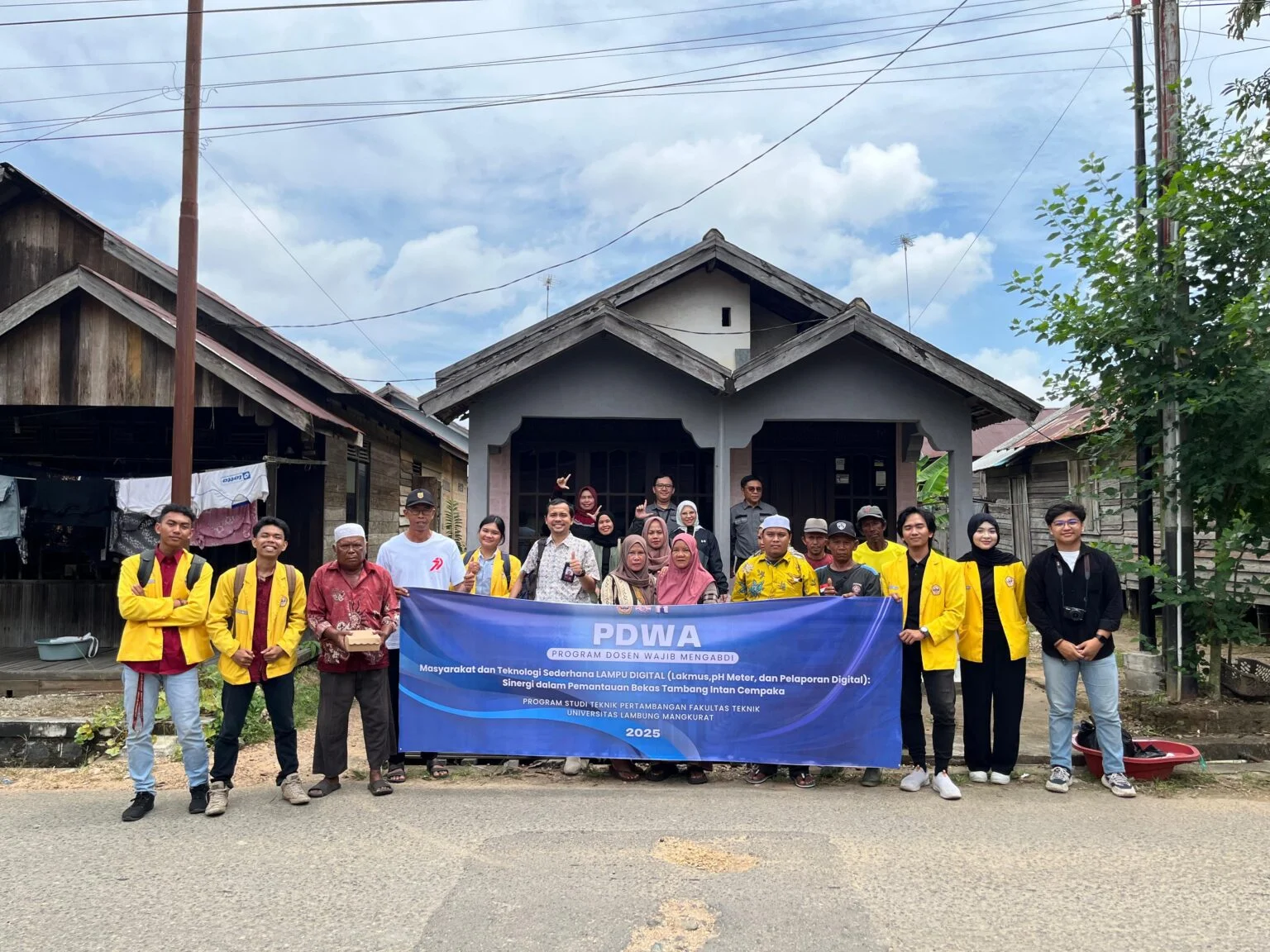
BANJARBARU – The Mining Engineering Study Program (PSTP) of the Faculty of Engineering, Lambung Mangkurat University (ULM), held a Compulsory Lecturer Service Program (PDWA) in the form of outreach and water quality monitoring in Sungai Tiung Village, Cempaka District, on Sunday (August 10, 2025).
This activity involved seven lecturers and students from the 2023–2024 intake who assisted the local community. Through a simple approach, residents were introduced to how to measure water quality using a pH meter and litmus paper. This method was chosen because it is easy to apply and relevant for monitoring environmental conditions, particularly in former diamond mining areas.
Throughout August, the ULM team and residents conducted daily monitoring at seven watercourses. The measurement results indicated that the water quality was in fairly good and stable condition. To reinforce these results, an information board was installed displaying 30 days of pH measurement data. This board serves as both an educational tool and a source of public information for the community.
The head of the community service team, Ir. Ahmad Ali Syafi’i, S.T., M.T., IPP., emphasized the importance of this collaboration.
“We want the community to have the understanding and skills to maintain environmental quality. Hopefully, this collaboration will be the first step in creating a healthier environment,” he explained.
The community also felt the direct benefits of this activity. Ruslan, Head of the Cempaka Tourism Awareness Group (Pokdarwis), expressed his appreciation.
“We are greatly helped by this program. Residents have gained practical knowledge to monitor water quality. I hope activities like this will continue because the benefits are real for us,” he said.
Going forward, ULM will present the monitoring results at the 2025 National Wetland Environment Seminar (SNLLB) in Banjarmasin and prepare them for publication in a Sinta 4-indexed national journal. This step also demonstrates ULM’s commitment to supporting environmental conservation and empowering communities through sustainable academic contributions.