Larvae-Free School Program: A Collaboration between ULM, UGM, and the Banjarbaru Government
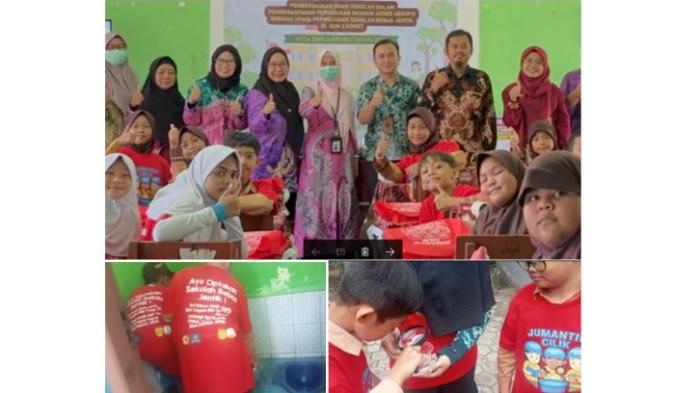
BANJARBARU – Lambung Mangkurat University (ULM), through the Faculty of Medicine and Health Sciences (FKIK), is implementing a program to empower school children by eradicating Aedes aegypti mosquito breeding grounds at SDN 2 Komet Banjarbaru. This activity aligns with the Rambai Emas Healthy Living Community Movement (Germas) initiated by the Banjarbaru City Government.
The program, themed “Larvae-Free School,” aims to create a healthy school environment while reducing the risk of Dengue Hemorrhagic Fever (DHF) transmission through early childhood education. ULM is collaborating with Gadjah Mada University (UGM) and receiving funding from the Bill & Melinda Gates Foundation.
The head of the program team from ULM’s FKIK, Dr. dr. Oski Illiandri, M.Kes, explained that this activity was designed with a participatory approach.
“We want children to become not just listeners, but also pioneers of a healthy environment. They are encouraged to learn in a fun way while fostering awareness from an early age,” he said.
Students at SDN 2 Komet received direct training from health workers, including Nurul Awliya, SKM, M.Kes (Banjarbaru Health Office) and Dr. Anggi Setyowati, S.Kep Ners (Nursing Profession Study Program, Faculty of Medicine, ULM). Students were taught to recognize the mosquito life cycle, conduct larva inspections at school and at home, and complete interactive worksheets for self-evaluation. They were also equipped with skills to become Junior Mosquito Net Cadres (Jumantik Cilik), able to lead cleaning activities at school and at home.
The Head of the Banjarbaru Health Office, Dr. Juhai Triyanti Agustina, MMKes, expressed her appreciation for this program. “We welcome this program because it aligns with the vision of Rambai Emas, namely mutual cooperation to create a clean and healthy environment,” she said.
Meanwhile, the Principal of SDN 2 Komet Banjarbaru, Dina Mariana, S.Pd., emphasized that this activity was very beneficial for the children.
“We hope that SDN 2 Komet can become a national role model in empowering students for school-based dengue control,” she said.
Support from the Bill & Melinda Gates Foundation was a crucial factor in the program’s success. Through a global philanthropic grant scheme, the funds were used to provide mosquito larvae monitoring equipment, digital educational media, and intensive training for teachers and students.
The activity concluded with the signing of a joint commitment. In the spirit of baimbai, ULM and its partners demonstrated that major changes can start in the classroom. If children are able to become pioneers, then the wider community can also take action.