ULM Faculty of Agriculture Student Community Service: Developing Local Potential for Sustainable Agriculture
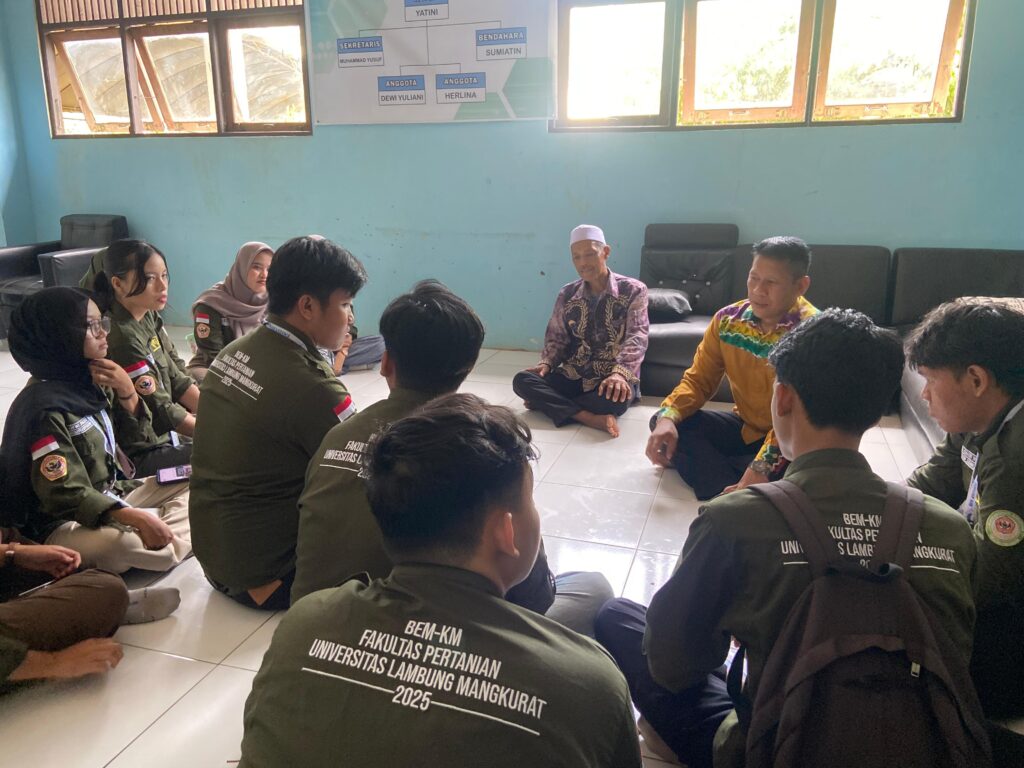
Banjarbaru – The Student Executive Board of the Faculty of Agriculture Student Family (BEM-KM Faperta) of Lambung Mangkurat University (ULM) is preparing to implement the Community Service Program (PKM) which will be held in July 2025 in Matang Batas Village, Hatungun District, Tapin Regency, South Kalimantan.
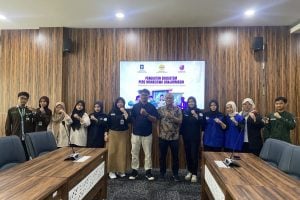
This activity began with a field survey carried out by the ULM Faculty of Agriculture BEM-KM team on Friday (6/13/2025) to map the real needs of the community, especially in the agriculture and livestock sectors. This survey is the basis for designing a community service program that is appropriate, based on field data, and in accordance with the socio-economic conditions of the village.
The Head of BEM-KM Faperta ULM 2025, Muhammad Rafi Akbar, explained that this year’s PKM activity carries the theme “From Nature to Life: Realizing Healthy Agriculture and Creating Valuable Local Products.”
“From the results of observations and discussions, we found several problems such as unutilized cow dung waste, farmers’ dependence on chemical pesticides, and the economic potential of coffee leaves that has not been developed,” he explained.
In response to these findings, the PKM committee designed three main focuses of activities that will be carried out during the community service:
Training in processing organic fertilizer from cow dung to encourage environmentally friendly agriculture.
Making natural plant pesticides such as neem leaves, lemongrass, and garlic as a safe alternative to pest control.
Counseling on processing coffee leaves into herbal tea, in order to increase added value and open up new business opportunities for the community.
“We hope that these processed products can later be managed through Village-Owned Enterprises (BUMDes) and become a driver of a sustainable local economy,” added Rafi.
The Coordinator of the Social Community Department of BEM-KM Faperta ULM, Muhammad Raja Dharmakusuma, added that the community service activities will be carried out for three days involving students from various classes and study programs.
The Coordinator of the Social Community Department of the BEM-KM Faculty of Agriculture ULM 2025, Muhammad Raja Dharmakusuma, said that the community service is planned to last for three days and will involve students from various classes and study programs, as well as the local community.
“We will use this survey as a reference so that the activities run in a focused, effective, and truly impactful manner,” he said.
As a form of support for this program, the Head of Matang Batas Village, Muhammad Tohib, also provided suggestions and hopes that the program designed by students was very good for the progress of the village. His suggestion is that in the future the village is expected to be better with this kind of activity.
“Because the benefits are not only for now but also for the sustainability of the village community.
It is hoped that this community service activity can encourage the progress of Matang Batas Village and provide real benefits for residents, especially in terms of healthy agriculture and empowering village potential,” said the Head of Matang Batas Village, Muhammad Tohib.
The same thing was also conveyed by Jumadi, Head of the BPD of Matang Batas Village, who was present representing the village community. He was present to convey suggestions from the community, about this community service activity so that it can be truly beneficial for students as field experience, as well as for the village community directly.
“Hopefully this activity can provide valuable experience for students while also elevating the status and good name of Matang Batas Village through the innovations produced,” he said.
This community service activity is expected to be the first step in realizing healthy agriculture based on local potential, as well as strengthening the relationship between the academic world and the village community in supporting sustainable development.
Through this program, ULM emphasizes its role as a university that actively builds partnerships with the community through applied research and real service. Students are not only observers, but are present as community partners to realize healthy agriculture based on local potential and oriented towards sustainability.